
What We Train Ourselves Not to Notice
A late afternoon meditation on beef tendon, Rome, and the price of an ordinary lunch
Previously: [A Thousand Years, Still Warm]
Next: [The Boiling Point of Comfort]
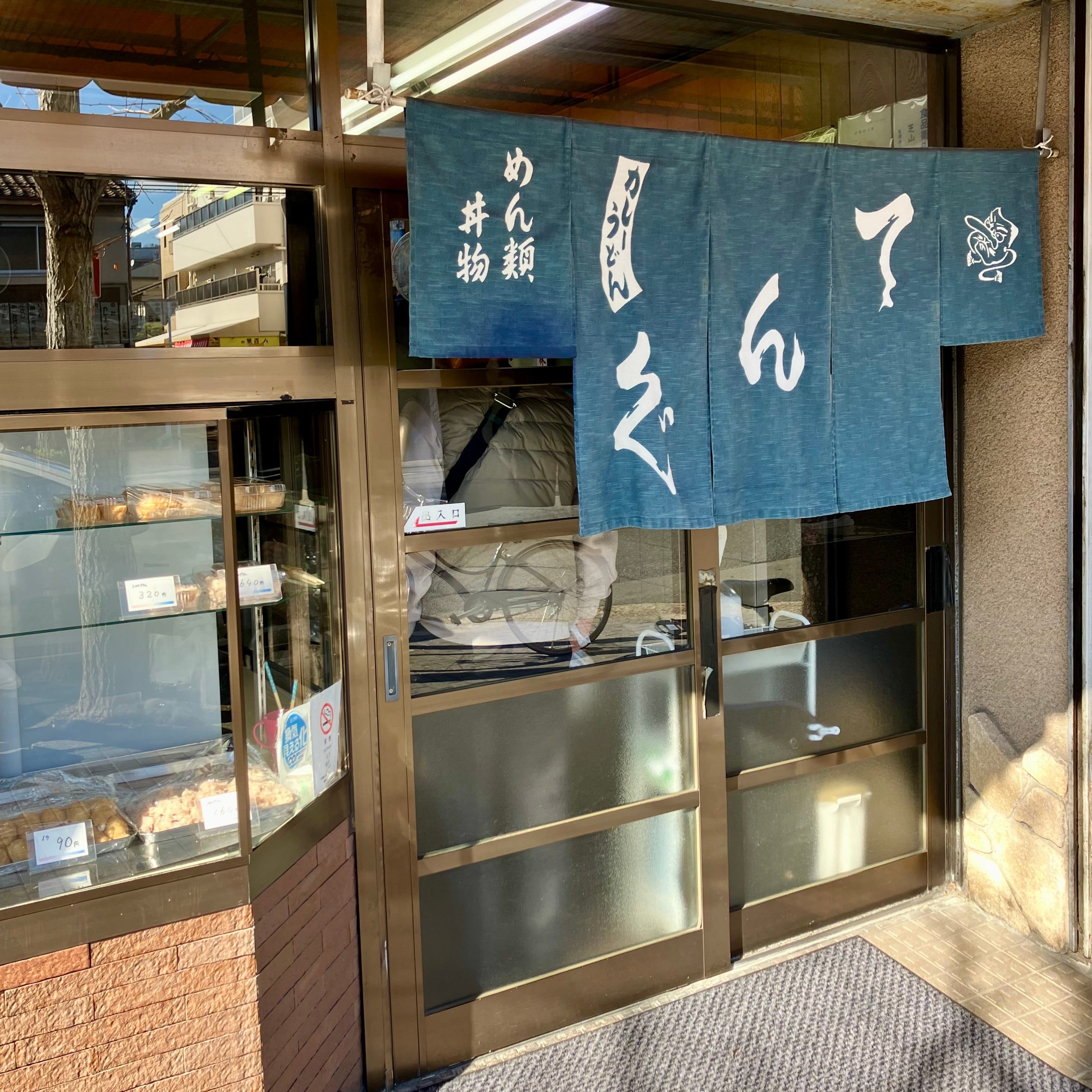
The next place I took her was a small udon shop near my university.
I wanted her to understand dashi.
Taste is only part of it. Dashi is less an ingredient than an underlying canvas—the background against which Japanese cooking quietly unfolds.
It is made by steeping kombu or bonito in water and then removing them, which can make the whole enterprise seem suspiciously theoretical to anyone raised to associate expense with tangible substance. And yet some of the most costly things in a Japanese kitchen disappear before serving.
High cost, however, is not always a guarantee of quality.
That, oddly enough, is what this little shop taught me.
On comforting distance
The system here is straightforward: you find a seat and take it. Most tables are shared. Only the small tatami room in the back belongs, temporarily, to whoever gets there first.
By noon, a line had formed outside—mostly working-class regulars, weathered and broad-handed. We took our place.
When there was only one party ahead of us, the man in front turned and looked us over.
“Two?” he asked, gesturing toward the back. “The tatami’s free. Go on.”
He had guessed, correctly, that a shared table would only force everyone into a polite, uncomfortable silence. By surrendering his premium spot, he preserved the room’s quiet equilibrium.
We thanked him and went in.
Inside, she looked around with open interest, taking everything in.
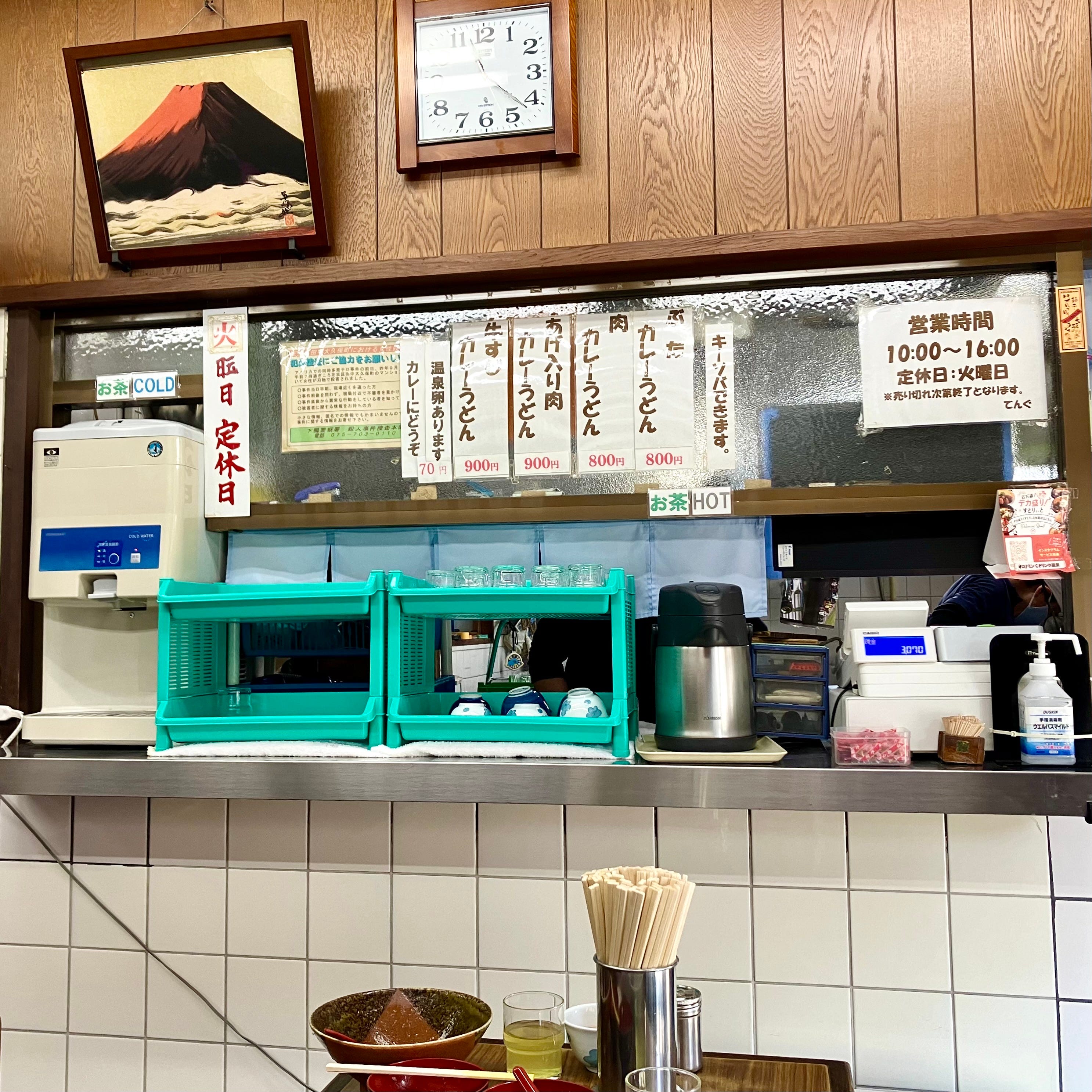
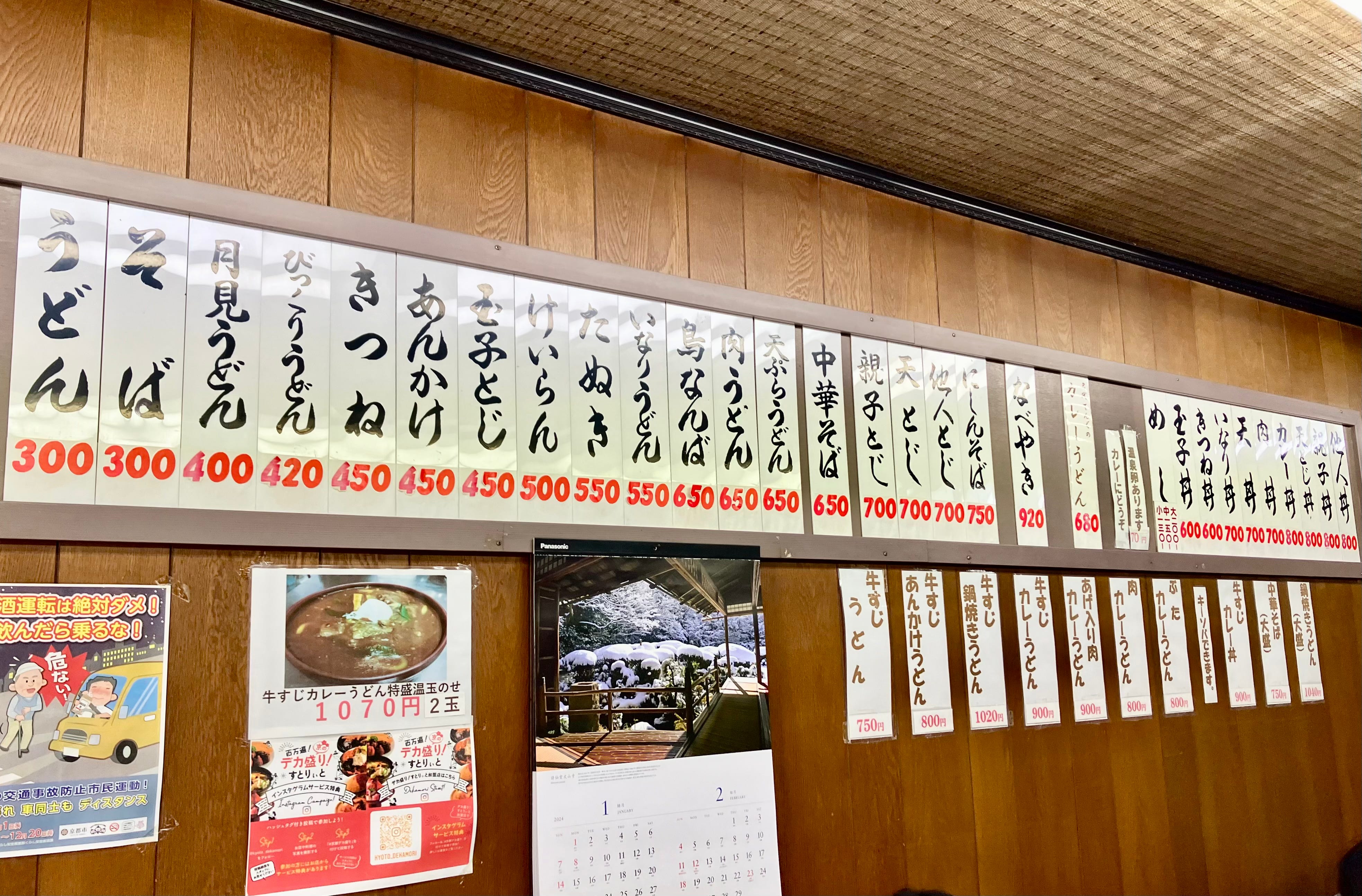
Of all the options, it was the tempura bowl that caught her attention.
So we ordered it.
What looks like surrender
When it arrived, anyone expecting conventional tempura would have assumed some mistake had been made.
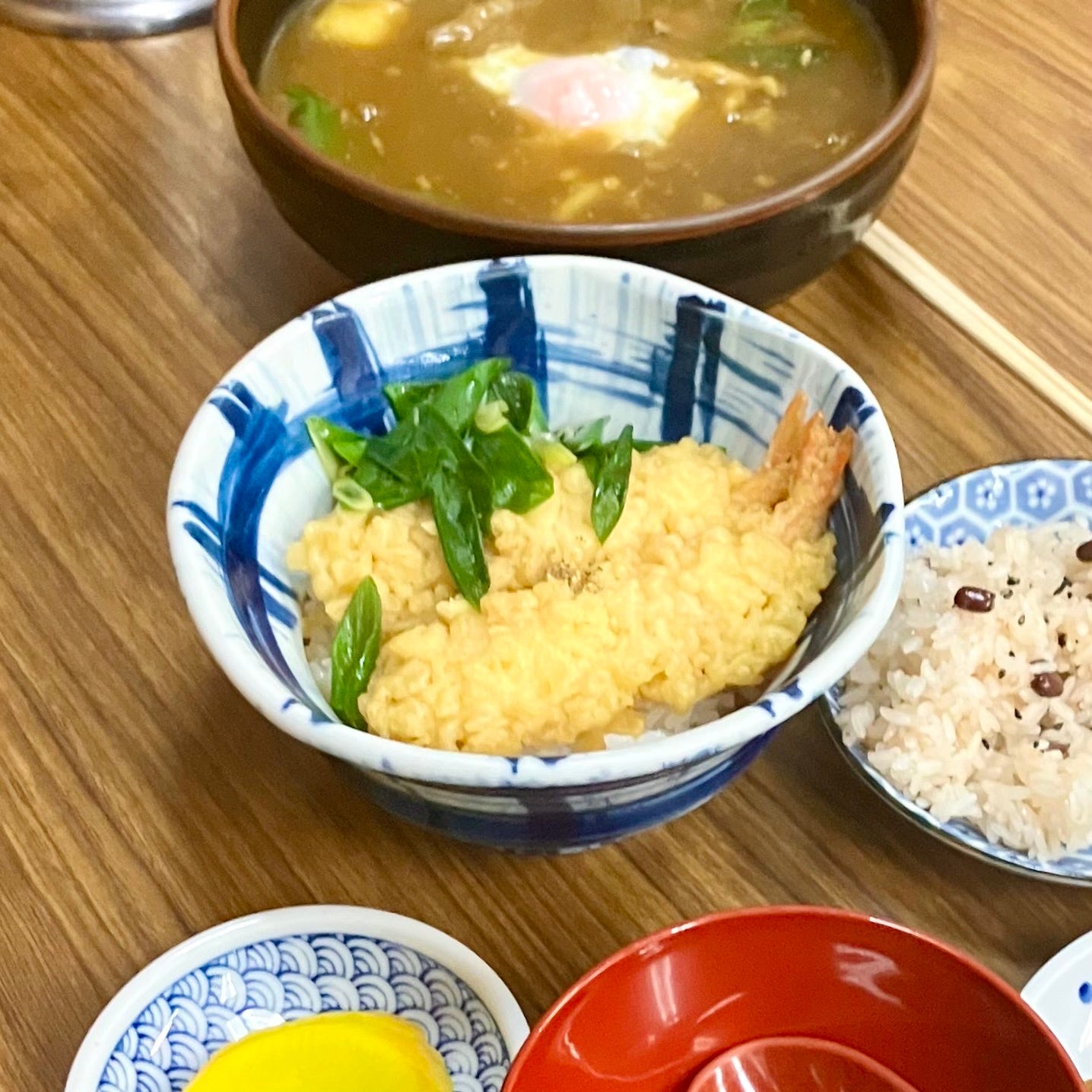
It was entirely submerged in broth.
The batter, which must once have crackled magnificently fresh from the fryer, had gone soft. The rice beneath it had disappeared under the same clear flood. To anyone raised on crispness as an article of faith, this would look like ruin.
But then, so would plunging a perfectly laminated croissant into café au lait. The French have somehow avoided being accused of negligence for this.
What looks like surrender is often transformation.
The broth enters the batter, and as you take that first spoonful, something curious happens. The trapped oil rises outward, melding instantly with the dashi. The fragrance of fried flour becomes suddenly larger, more aromatic, less contained. What had been texture becomes flavor. The richness arrives all at once, not heavy but fluid, moving across the tongue with a kind of improbable softness.
Even in Japan, this is not the preferred style. People speak of crispness with the devotional certainty usually reserved for moral principles. Freshly fried tempura is expected to announce itself.
This does not. It yields.
And in yielding, it lets the broth take over.
The shrimp itself was almost comically thin, little more than a suggestion inside its architecture of batter. Its purpose was not dominance but permission. It allowed the dashi to become the point.
And beneath it all, the rice. This may be the strangest part.
When hot broth reaches freshly cooked rice, the surface starch loosens and slips away. The grains separate. They become glossy and distinct.
Not waterlogged. Released.
Each grain swells slightly, takes on broth, and slips down with an ease that feels almost illicit. It offers none of the meditative resistance of plain white rice, that slow pleasure of patient chewing.
This is something quicker, stranger, and perhaps a little less respectable. Which is precisely why it is so good.
How Curiosity Becomes Cuisine
We also ordered the shop’s curry udon, its other local institution.
As an act of mild extravagance, I chose mine with beef tendon.
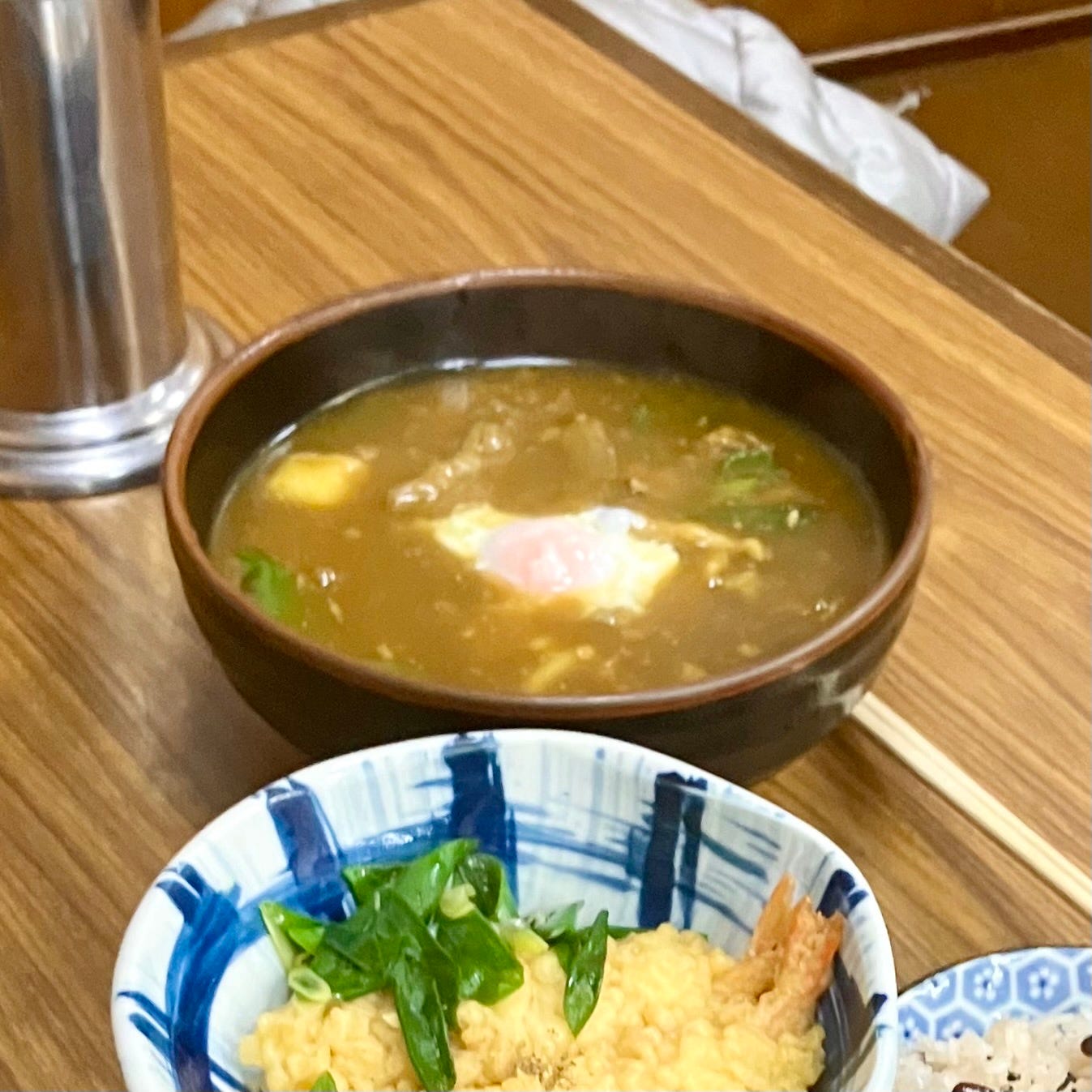
The curry had been stretched with dashi until it lost all heaviness without losing depth. The tendon, after hours of cooking, had reached that miraculous state in which toughness ceases to be corrected and becomes luxury instead.
She took a bite and looked briefly puzzled.
“This is nothing like the curry I know,” she said.
Then she smiled.
“But it’s good.”
A moment later she added, almost to herself, “So Japanese people eat every cut of beef too. Like Italians.”
She told me that in Rome, her mother often made tripe stew.
And suddenly her ease with all this made perfect sense.
A doctorate is generally taken as evidence of intellectual curiosity. But then so is a civilization that looked at tripe and thought: perhaps, if simmered long enough.
At some point, someone noticed what patience could do to an otherwise neglected part of an animal. They told someone else. That person tried it, partly from skepticism and partly from hope, and discovered that the world had been larger than expected. Then they told another person.
This is how cuisine advances: not through refinement, at least not at first, but through appetite emboldened by curiosity. Tradition, when examined closely, is often just successful experimentation that has been repeated for several centuries.
Japan, I suspect, arrived at beef tendon much the same way Rome arrived at tripe.
Someone was curious enough to ignore common sense.
Everyone else was fortunate enough to follow.
The Price of Ordinary Things
It was November 18, 2024.
Above the counter, the television was showing news of the American presidential transition.
Inflation had become difficult, she said.
The plainest udon at this shop cost three hundred yen, about $1.92 at the exchange rate then. The beef-tendon curry udon I was eating—a luxury, by this establishment’s standards—came to $5.76.
“At $5.76,” I said, “you couldn’t get lunch in America.”
She laughed.
“You couldn’t get water.”
I smiled, assuming this was exaggeration of the sort inflation invites.
After we finished eating, I carried our cups to the self-service kettle and filled them with green tea.
Watching the steam rise, I began to suspect she had not been joking at all. Perhaps there are countries where six dollars disappears before the meal even begins.
That morning, at Ichiwa Ichimonjiya Wasuke, I had found her delight at complimentary tea charmingly foreign.
Now, standing there refilling our cups, I wondered whether I was the foreign one.
The water climbed slowly toward the rim.
And watching it, I found myself thinking about what people mean when they call a price reasonable.
I began to suspect that “reasonable” is often just whatever a country has trained its people not to notice.