
The Boiling Point of Comfort
On the volatile chemistry of sake, mother’s cooking, and the beautiful irony of tolerance

Previously: [A Thousand Years, Still Warm], [What We Train Ourselves Not to Notice]
Having been entrusted with dinner following our lunch, I decided it was time to introduce her to the elusive concept of koku.
Koku is a complex tapestry woven around umami—a richness that extends beyond taste itself, lingering as a deep, fragrant aftertaste long after the food is gone.
The finest vessel for experiencing this is sake, and I thought I knew just the place in Kyoto to find it.
Where Sake Leads
Our destination was Renkonya, an authentic izakaya tucked away in the Kiyamachi district.
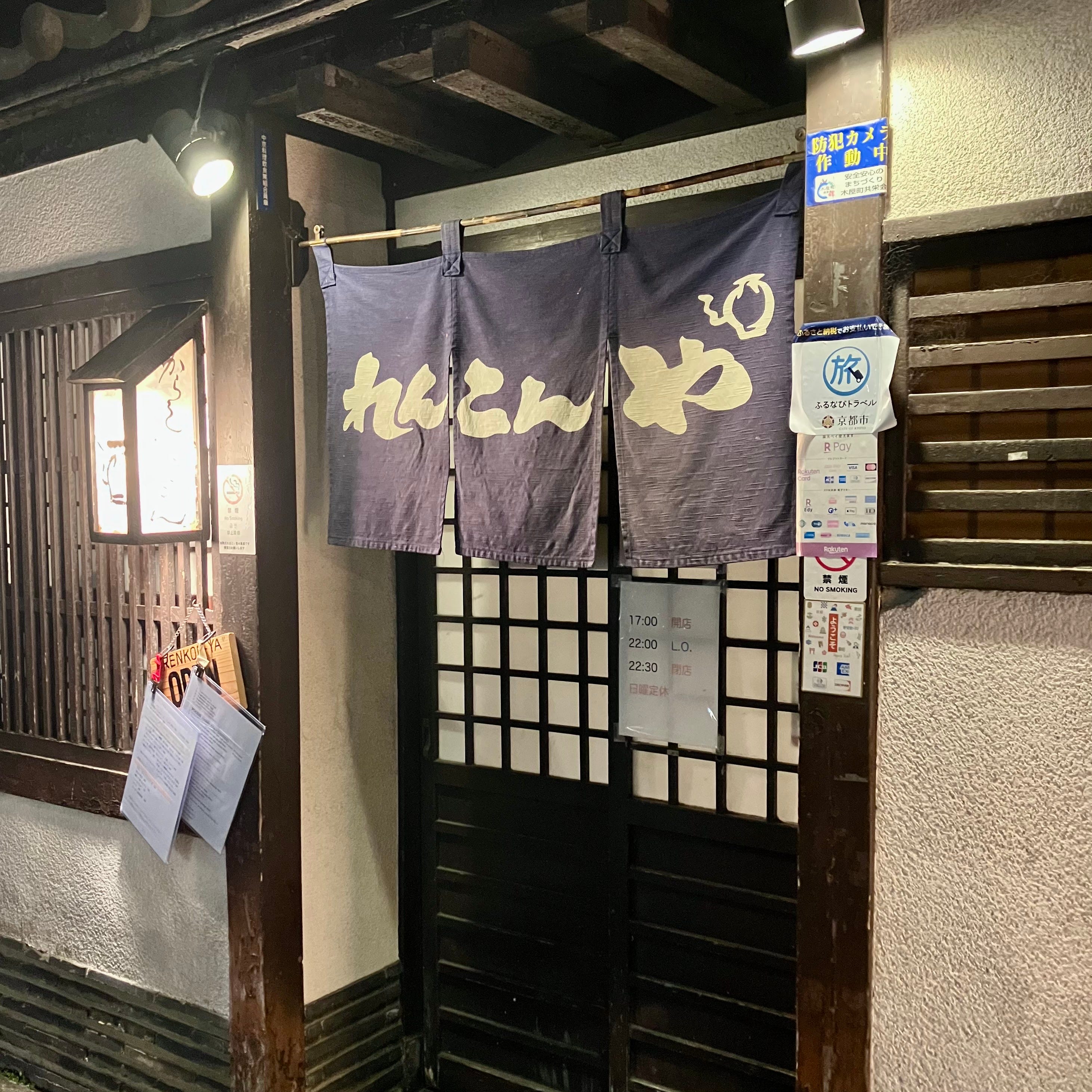
With its weathered wooden facade, the tavern holds a mere twenty seats, yet it did not escape the radar of the Michelin inspectors. It earned its place as a Bib Gourmand selection back in 2023.
Shameful as it may be to admit, that accolade was the very reason I, someone utterly lacking the tolerance for it, discovered the establishment in the first place.
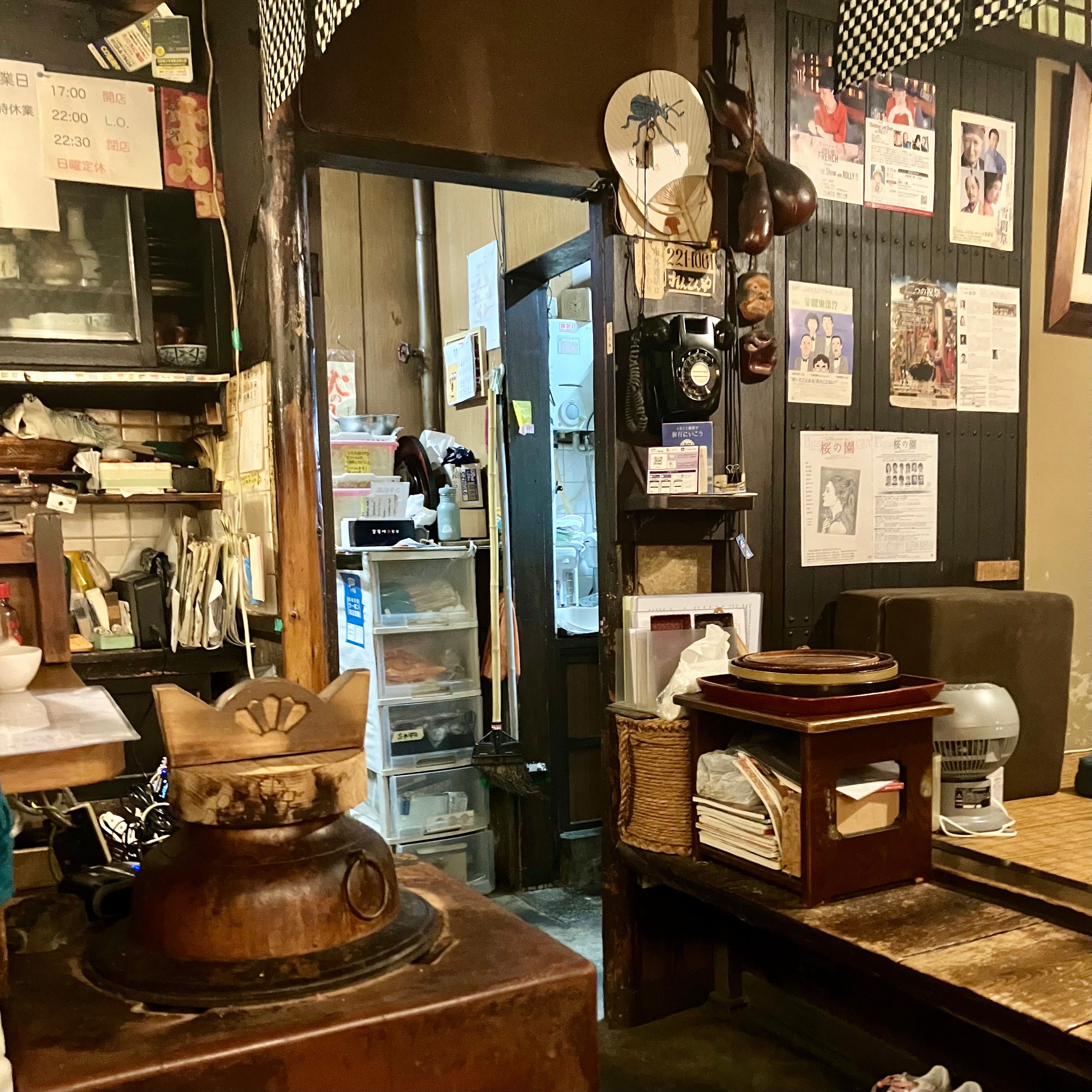
I cannot drink alcohol, yet I am intimately acquainted with the koku of sake.
The reason for this paradox will follow, but at that moment, the more pressing dilemma was how to alleviate the guilt of occupying a seat in an izakaya without ordering a drink.
To solve this, I summoned my partner who could drink.
And so, with science as our lingua franca, our three-person banquet commenced.
The Reverse Equation
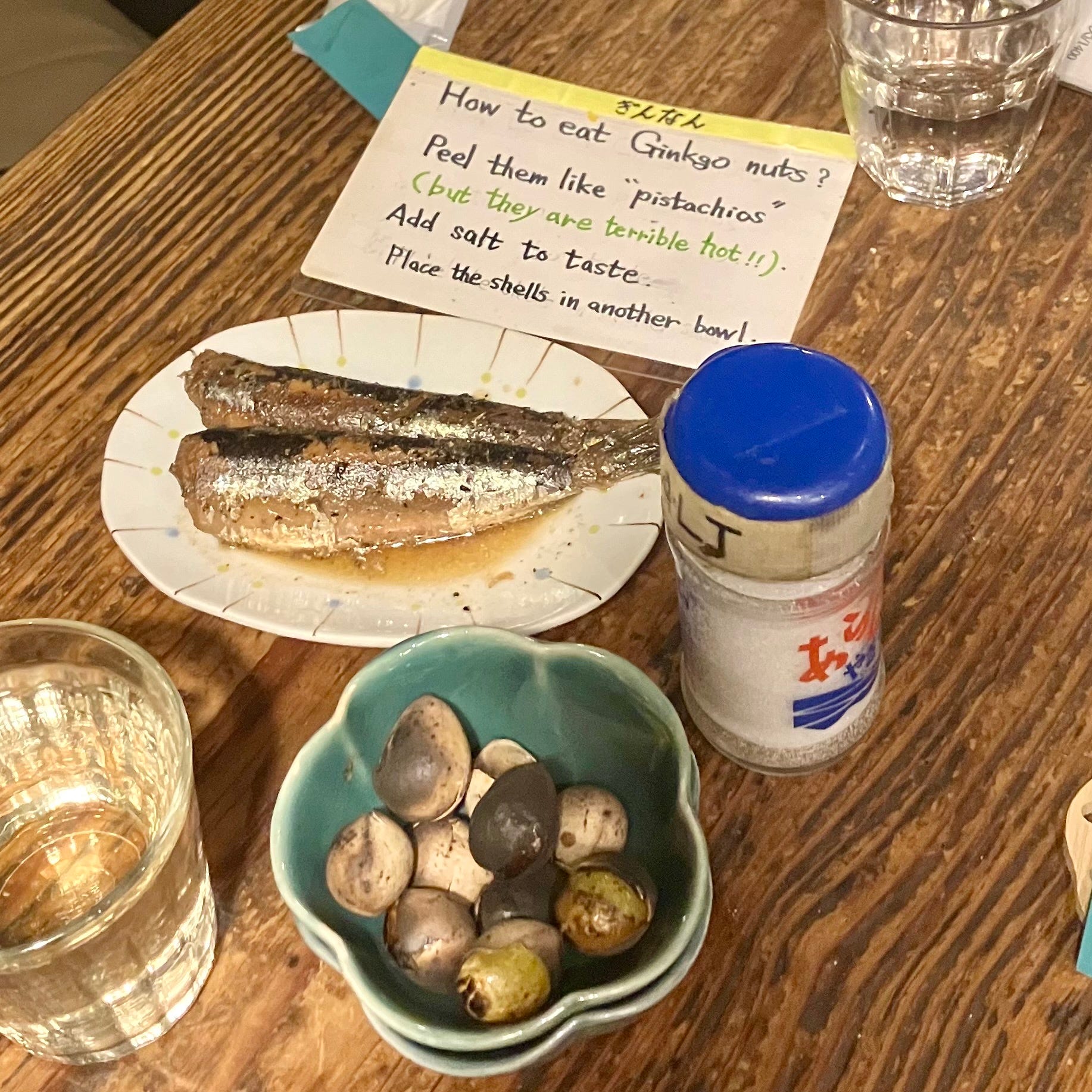
The culinary experience offered here is not about using sake to elevate the food. Rather, it is about using the power of the dishes to make the sake taste as magnificent as humanly possible.
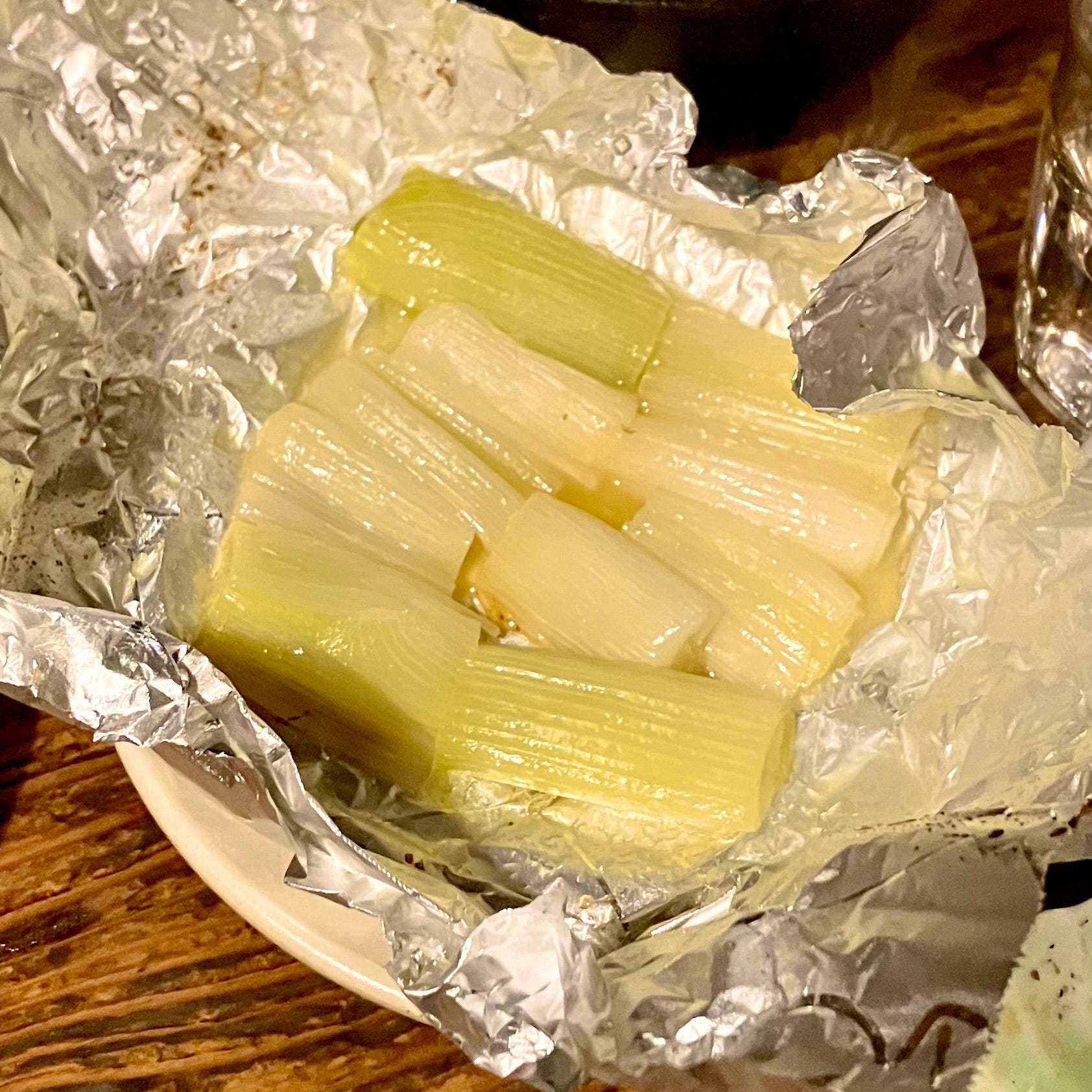
Plates arrived one after another: ginkgo nuts, combining the comforting warmth of a bean with the richness of a nut; steam-grilled scallions drenched in butter; and more sake-friendly creations than I could properly keep track of.
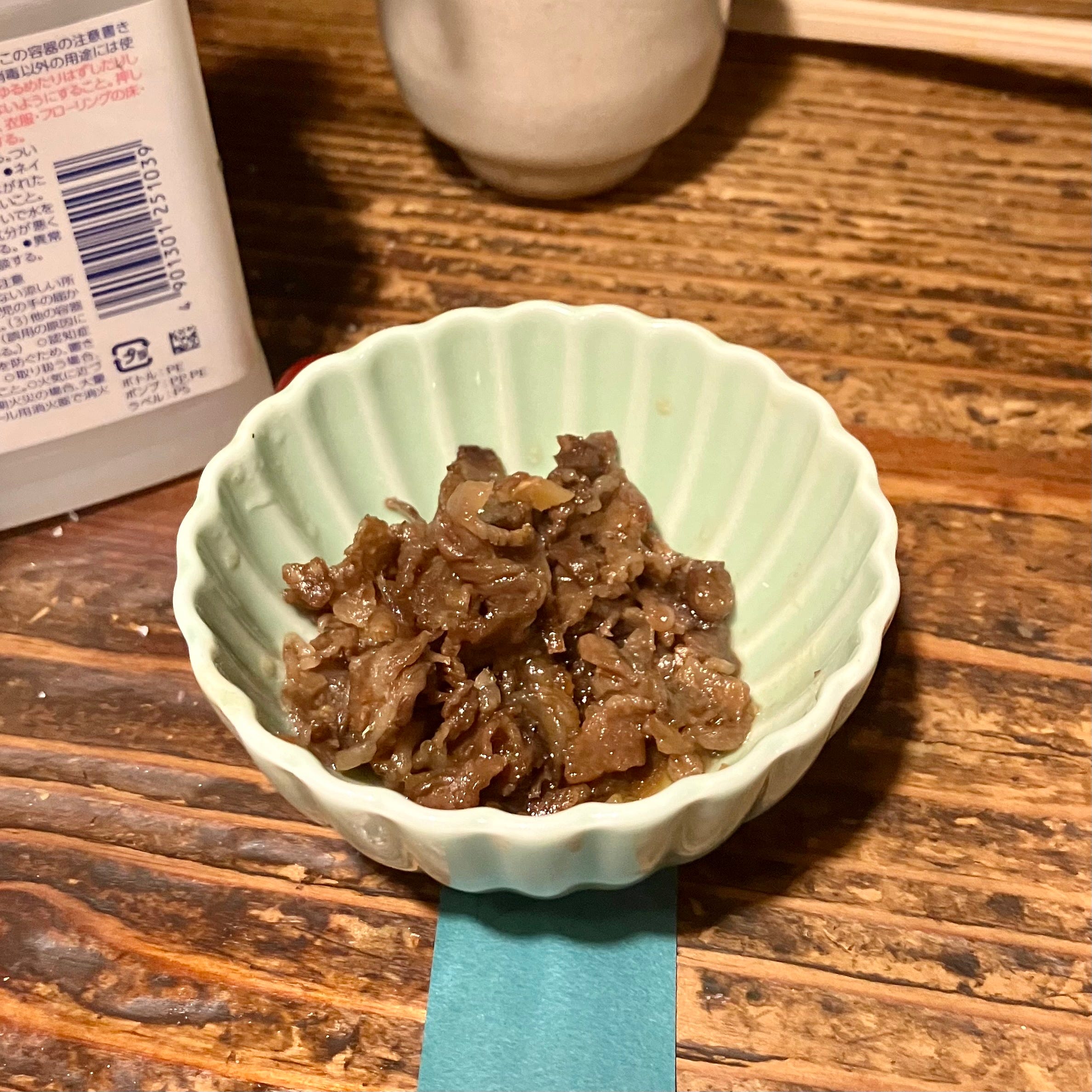
One dish in particular secured its place as her most deeply moving experience of the night: the shigureni. The beef was enveloped in a thick glaze of soy sauce and sugar, reduced until it felt less like a coating and more like a second layer of the meat itself. Its salinity was so concentrated that a single pinch felt capable of anchoring an entire bowl of rice, which left little doubt as to why it paired so beautifully with sake.
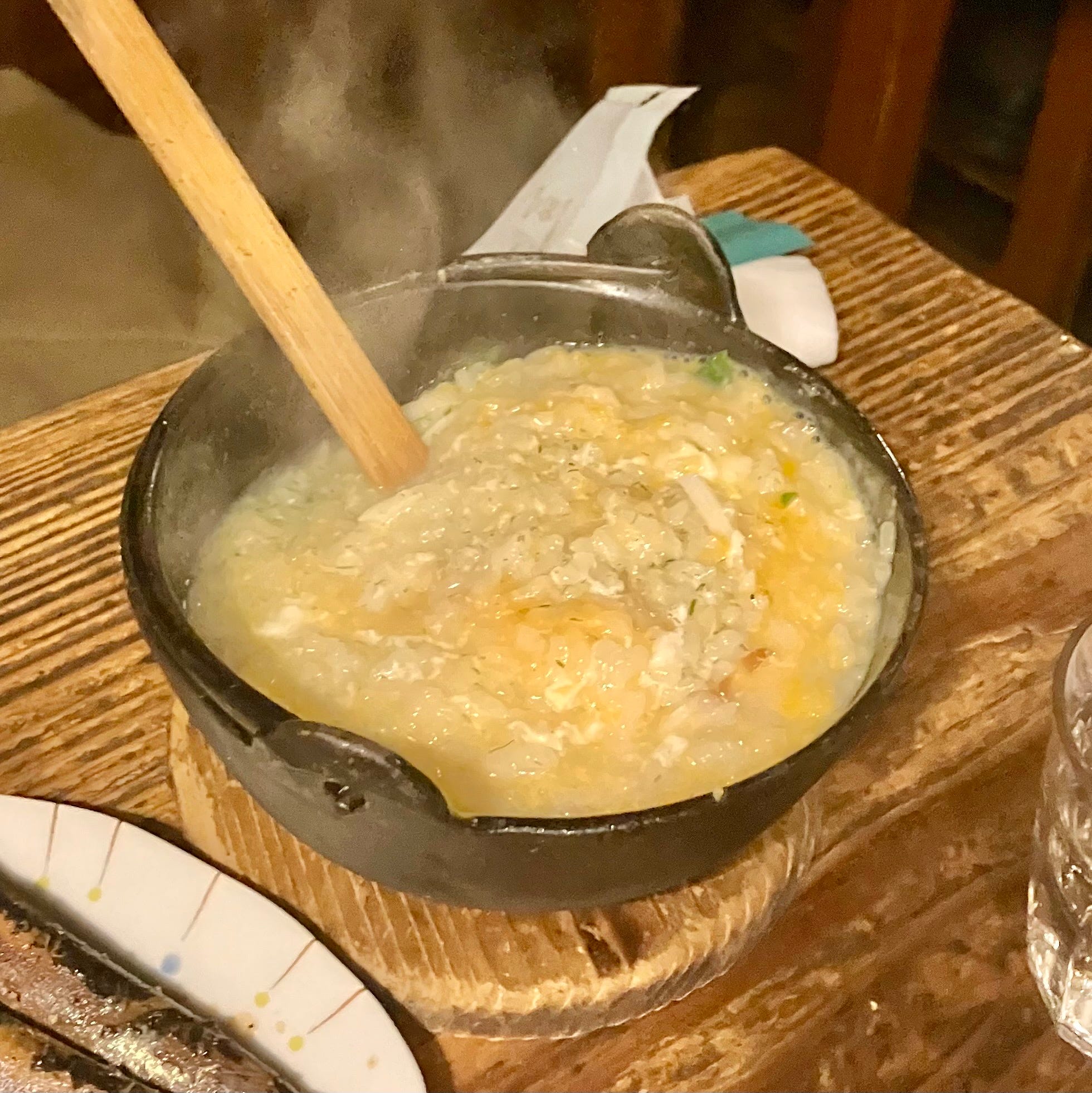
By the time the zosui arrived—a bowl of rice simmered in dashi and finished with a softly set egg—the evening had softened into that particular warmth that only rice, broth, and good company seem capable of producing.
When it came to the sake, my partner read her curiosity perfectly, ordering a diverse range of styles so she could experience every direction the drink had to offer. Ultimately, her absolute favorite turned out to be the nigorizake.
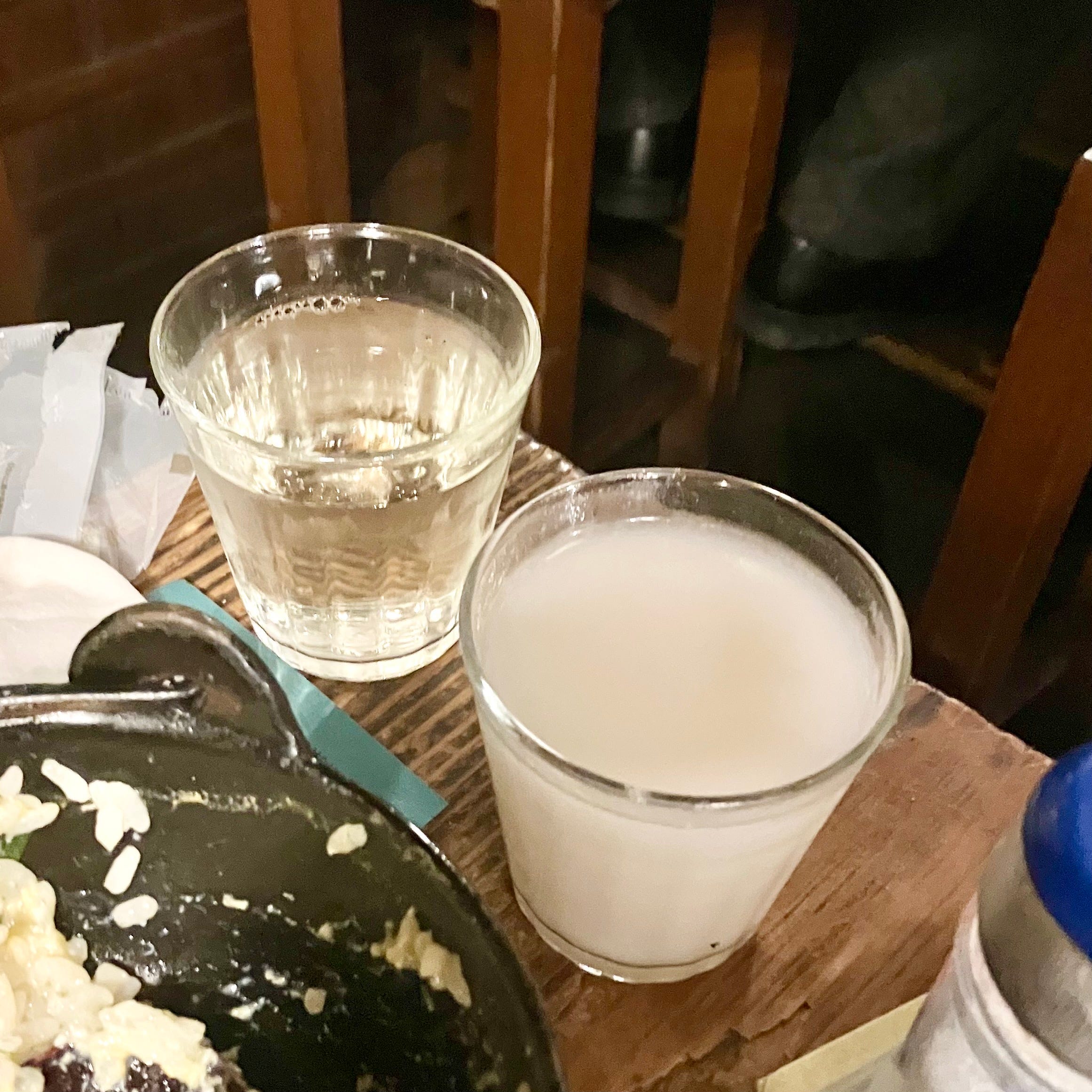
In the standard brewing process, the solid remnants of the rice that refuse to dissolve during fermentation are pressed out and discarded as sake lees. Yet, to discard the lees is to forfeit some of the very depth and lingering richness that koku describes.
Watching her develop a fondness for this intentionally unfiltered nigorizake, the true purpose of tonight’s dinner felt beautifully complete.
The Boiling Point of Comfort
She turned to me and asked, “When did you realize you had no tolerance for alcohol?”
“When I was a child,” I replied.
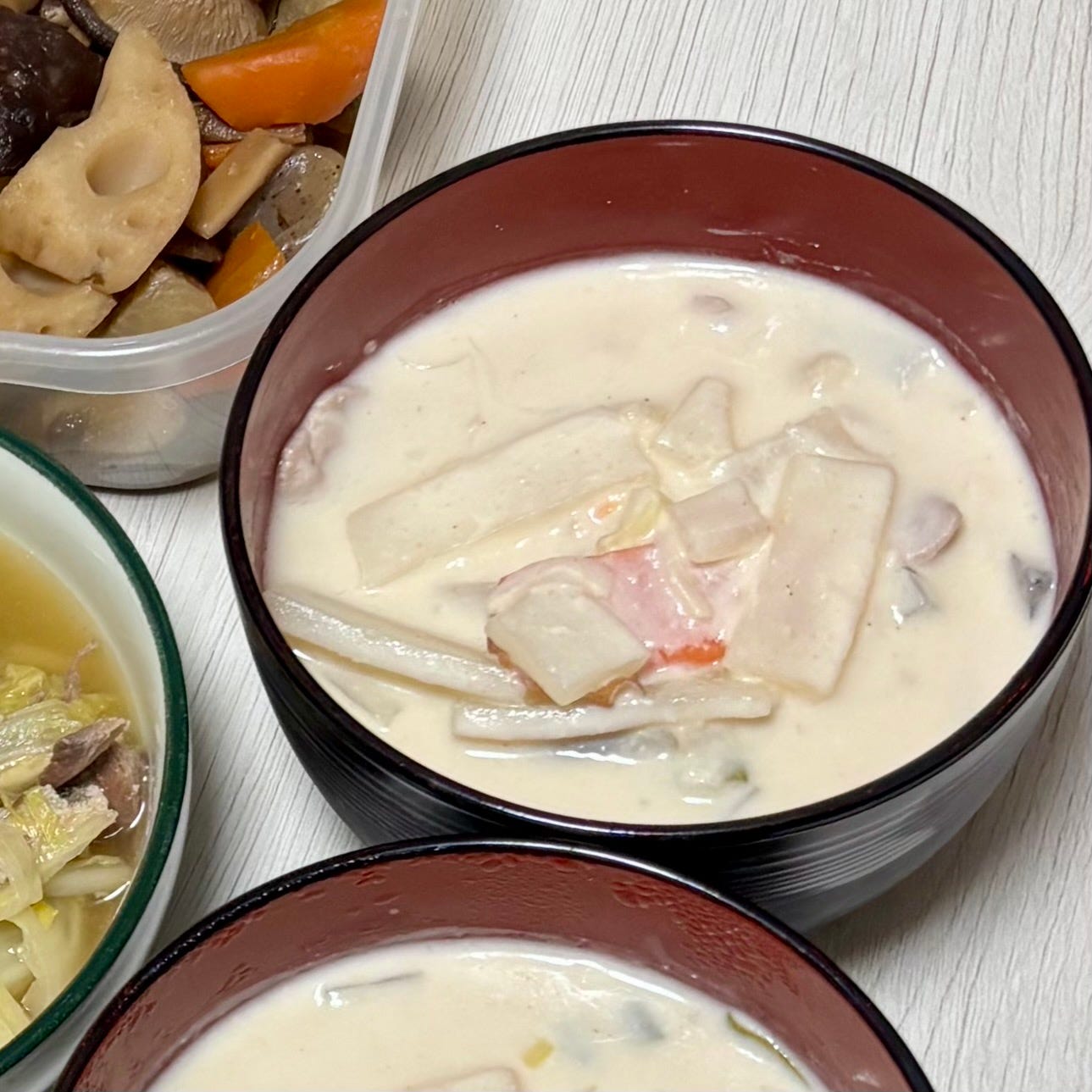
I decided to tell her the story of kasujiru, a traditional Kyoto comfort food. It is a thick, viscous winter soup made from those very sake lees—the kind of dish brewed to warm you to the very marrow of your bones.
If you step into Kyoto during the winter, you will notice how the biting, crystalline air renders the distant mountains vividly sharp. But in the next breath, you are forced to cast your eyes downward as the merciless cold crawls up from the earth, utterly ignoring your shoes to wrap itself around your ankles.
Yet, I found myself actually looking forward to this biting arrival. The reason was entirely down to one thing: it meant the return of kasujiru season. The moment my morning breath turned to white vapor, I would pester my mother to make it.
But there was a catch—brewing kasujiru for a family completely devoid of alcohol tolerance was always a rather thrilling experiment.
Sake lees retain a startling amount of residual alcohol. If you simmer the soup for too long, the alcohol vanishes completely, but with it goes the magical aroma—sweet, voluptuous, and silken—that this rice-derived ingredient acquired through the grace of fermentation. Conversely, if you take it off the heat too early, the flavor remains spectacular, but the soup threatens to make our heads spin.
When cooking kasujiru, my mother would peer into the steam with the intense concentration of a scientist, meticulously calculating the optimal moment of evaporation. She was aiming for that precise, fleeting second where the raw, jagged edge of the alcohol dissipates, while the fragrant soul of the refined sake remains imprisoned within the broth.
Occasionally, her calculations missed the mark.
On those nights, a peculiar silence would settle over the dinner table. One by one, the cheeks of every family member would flush a deepening crimson.
Though I could feel my heart pounding with a violence entirely unsuited to a child’s torso, I never uttered a word of complaint.
Lifting the bowl with both hands, I pressed my lips directly to the lacquer, tilting it to drain the warm broth to its final drop.
Then, peering up at my mother with a faintly glowing face, I would offer a quiet smile and repeat my usual refrain: “It’s beautiful, Mom. Please make it again.”
The Evolutionary Switch
Upon hearing my tale, she shared a story of her own homeland’s wine stews. Because they are simmered for hours, the alcohol burns off entirely, rendering them perfectly safe for even small children to consume. It had never occurred to me to draw a parallel between kasujiru and a wine stew, yet they are undeniably cut from the same cloth.
However, if one were to subject kasujiru to such prolonged boiling, the delicate, ephemeral nuances of the sake lees would completely take flight. To achieve sublimity, the secret is to keep it below a boil, introducing the heat only briefly. “And so,” I explained to her, “it is inevitable that a fraction of the alcohol remains. But we eat it anyway, because we crave it.”
There lay the delightful irony.
One culture, blessed with humanity’s original tolerance, meticulously boiled every drop of spirit out of their wine stews—while we, carrying the genetic switch for alcohol intolerance, willfully pursued a soup that retained it.
Fully aware of the risk, we have spent thousands of years cheerfully ignoring that switch whenever a flavor seemed worth the trouble—as though evolution had merely written a warning label that taste never bothered to read.
Between us sat the cloudy nigorizake she had fallen for. My partner was explaining the differences between the bottles with the earnestness of a scientist discussing a favorite hypothesis, while she occasionally compared a note or aroma to something from home. We ordered another round and continued talking long into the evening.
The switch, as always, was politely ignored.