

A wagashi-loving friend asked me an unexpected question the other day.
Why are so many Japanese sweets obsessives also obsessed with spiced curries?
I laughed, because I knew exactly what she meant.
The overlap is suspiciously large. I’m part of it myself.
At first glance, wagashi and spiced curries should have nothing to do with each other. One is quiet, restrained, almost ceremonial; the other is loud, restless, and gloriously chaotic.
And yet they trigger the same kind of fixation: flavors that unfold slowly enough to keep the mind chasing after them, until something in our thinking quietly shifts.
Japan’s spiced-curry movement fascinates me for exactly this reason.
It feels less like adaptation and more like conversation: a meeting point where unfamiliar ingredients are gently persuaded into harmony.
The Mandala Arrives
Recently, that curiosity took me to Nara.
Not for the Great Buddha, or the temples, or the ancient capital’s solemn beauty.
I went for a thali at toi 印食店, a celebrated Indian restaurant tucked into the old city.
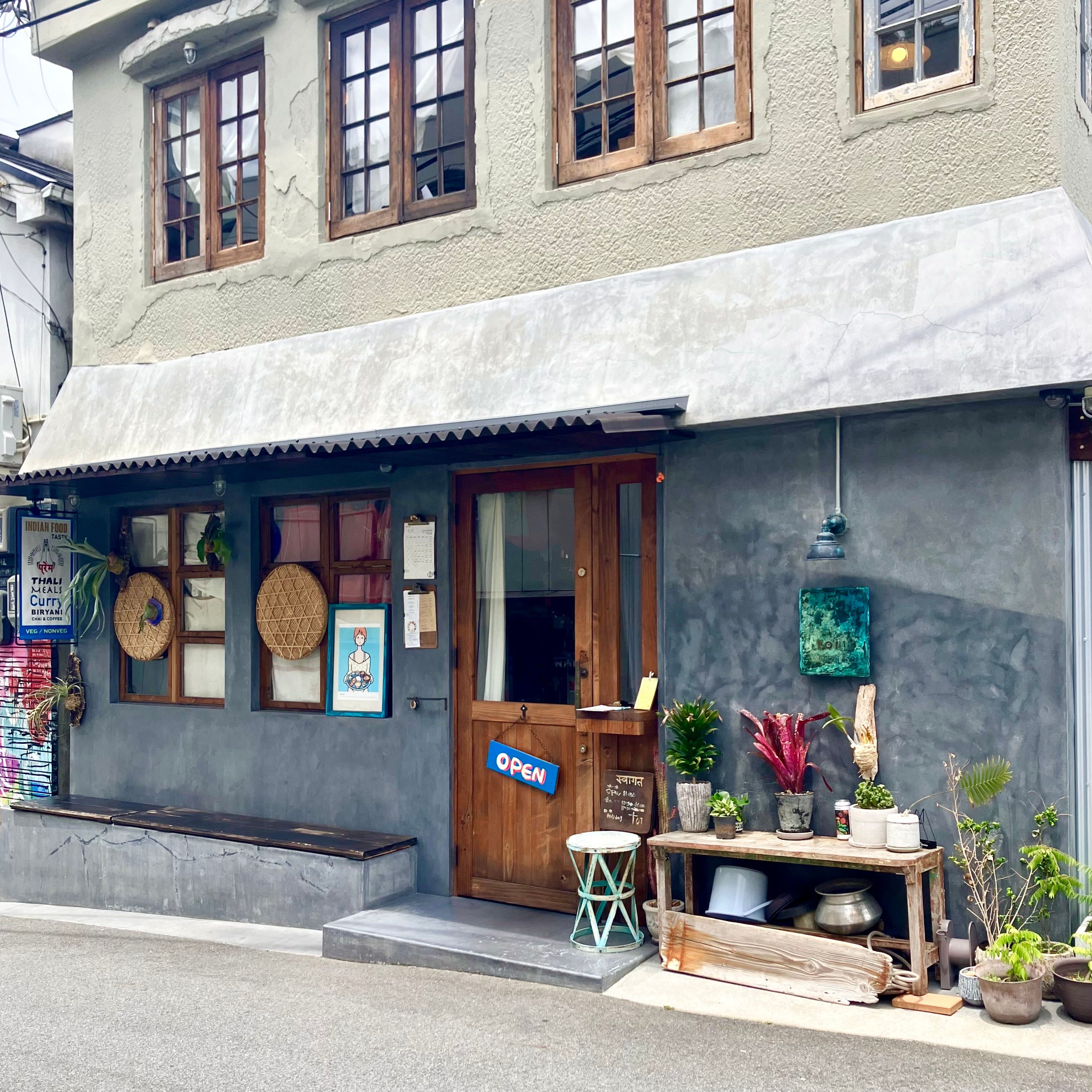
Even arriving five minutes before opening wasn’t enough to beat the queue. By then, a line had already formed outside. I added my name to the waiting list and wandered the quiet streets until my phone rang.
When I finally sat down upstairs and ordered the three-curry thali, I knew immediately it had been worth the wait.
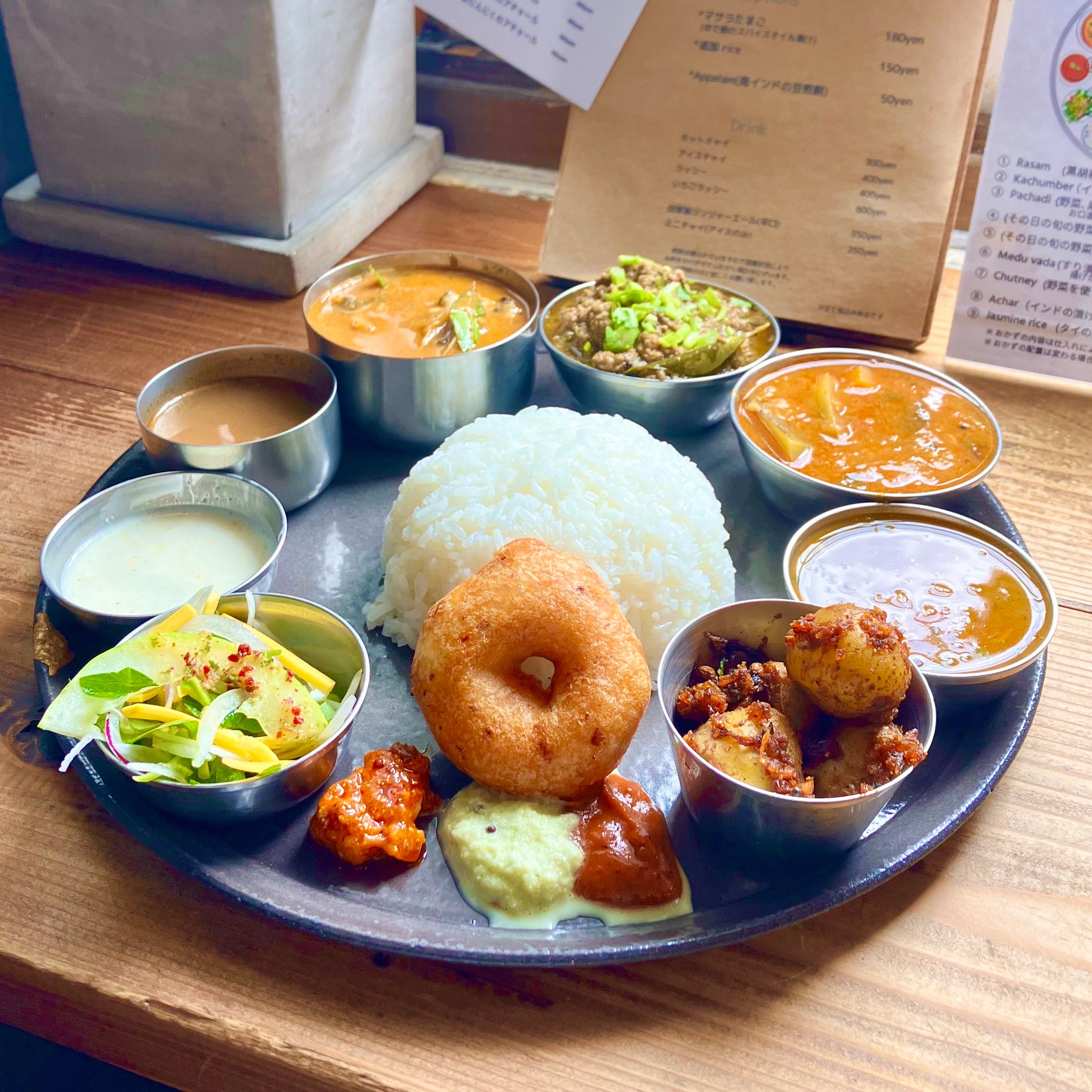
It arrived like a mandala.
Color radiated across a silver platter in careful geometry: small bowls, bright chutneys, textured vegetables, crisp fried elements and liquid ones, each placed with enough precision to feel inevitable.
So I did what felt right: I started carefully, one dish at a time.
Three Curries, Three Personalities
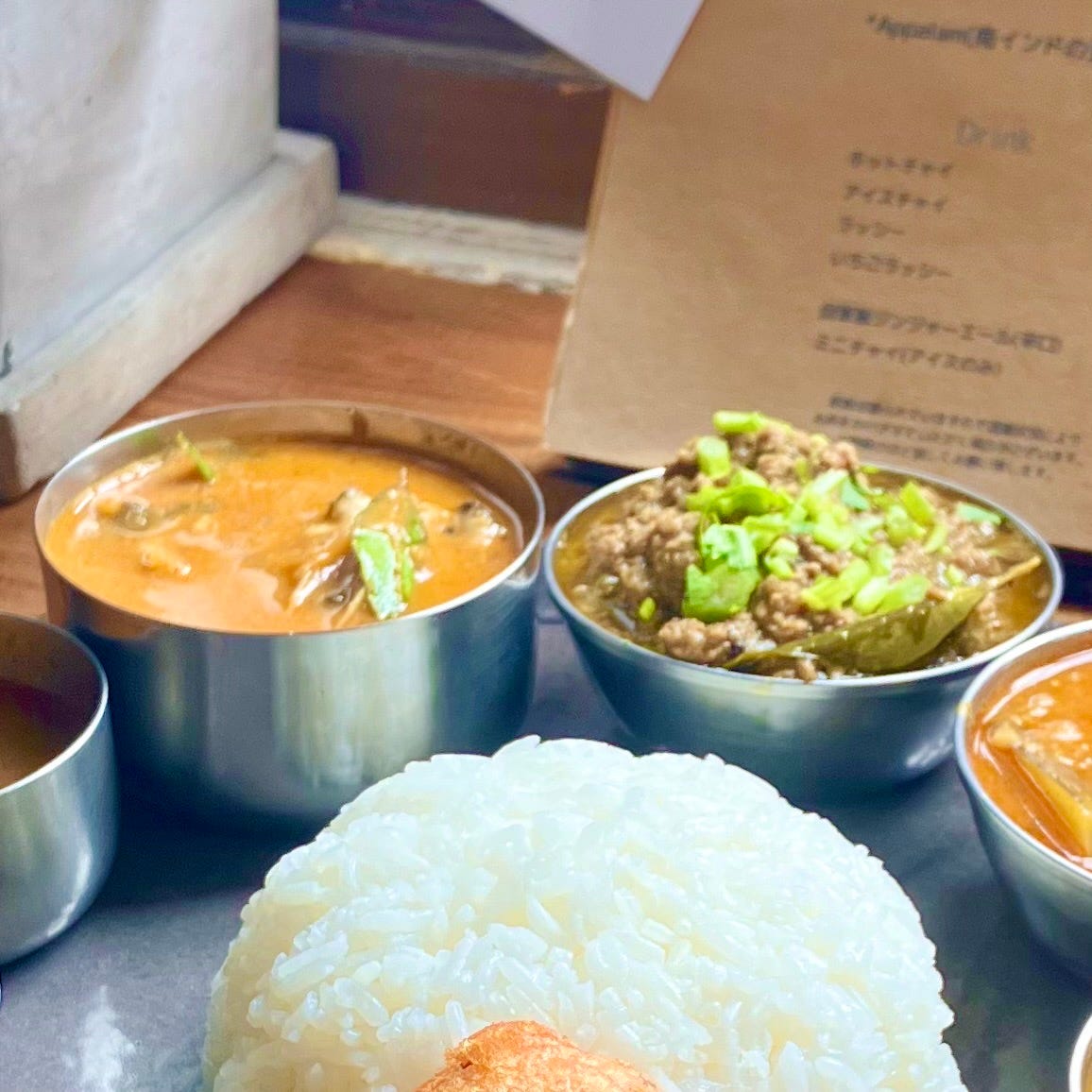
The oyster curry was astonishing.
The sea announced itself immediately.
It carried the same deep savoriness that good Japanese dashi often draws from seafood—clean, concentrated, and quietly expansive.
Three large oysters rested inside, perfectly tender—the flavor of the sea stripped down to its purest form.
The mutton keema was equally remarkable.
Lamb is my favorite meat precisely because it resists politeness. It insists on itself. Good lamb should retain some trace of wildness.
This one kept just enough of that edge.
The aroma of fresh herbs arrived almost immediately after the first bite, lifting the richness upward. The spice followed slowly, blooming with restraint. Beneath it all sat the quiet sweetness of vegetables and legumes, holding everything in place.
It was perfectly mannered without becoming tame.
The sambar, built from lentils and summer vegetables, seemed simpler at first.
Then it revealed itself.
The eggplant and tomato had collapsed into complete softness, releasing a sweetness so clear and clean that I immediately recognized it.
I cook often, and I spend an unreasonable amount of time trying to coax exactly that kind of sweetness out of vegetables.
One spoonful was enough to make me think:
Ah. So this is the answer.
The Potatoes That Stopped Time
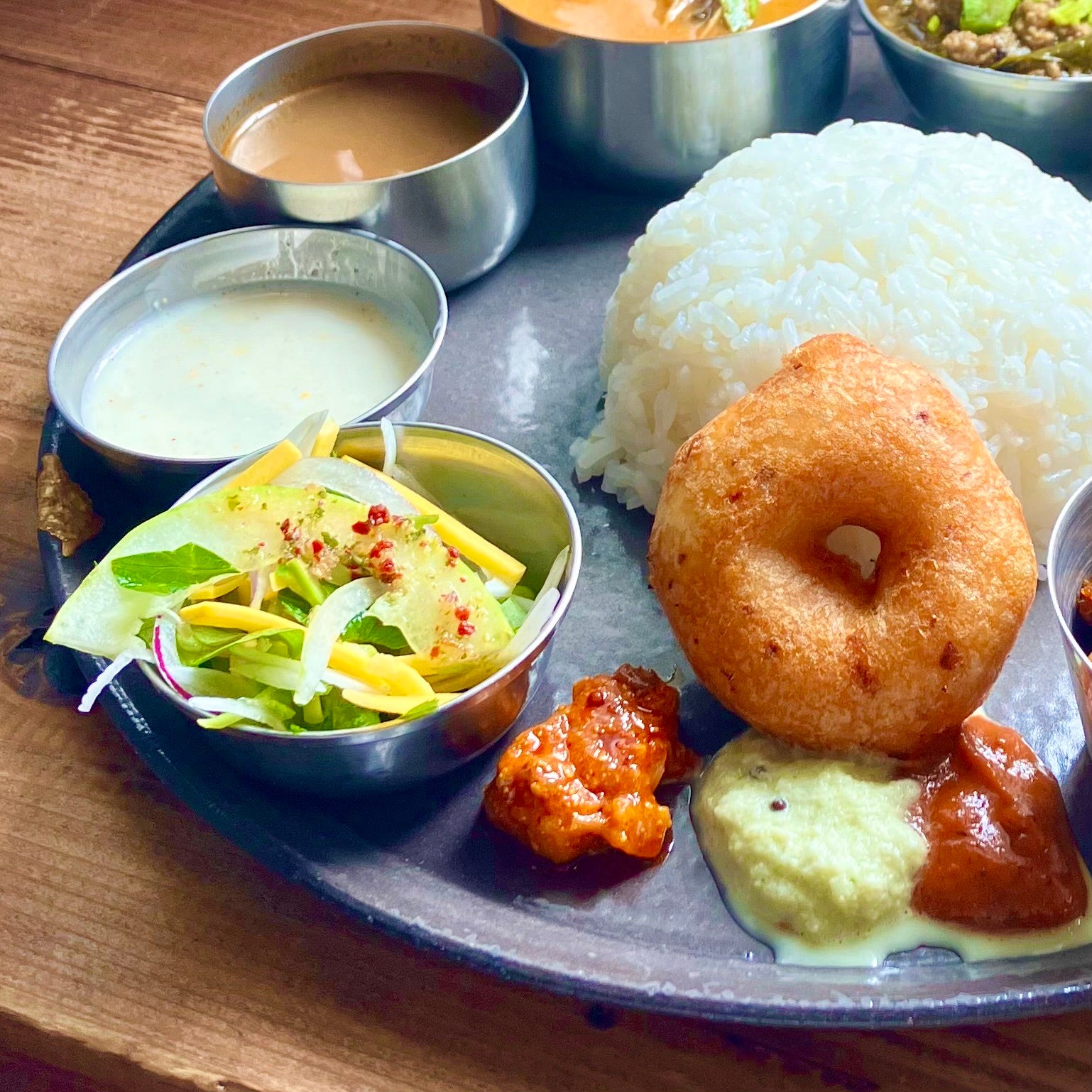
Around these curries gathered their supporting cast: a crisp medu vada fragrant with herbs, bright achar, cooling pachadi, and a thin, lightly bitter soup whose flavor puzzled me at first.
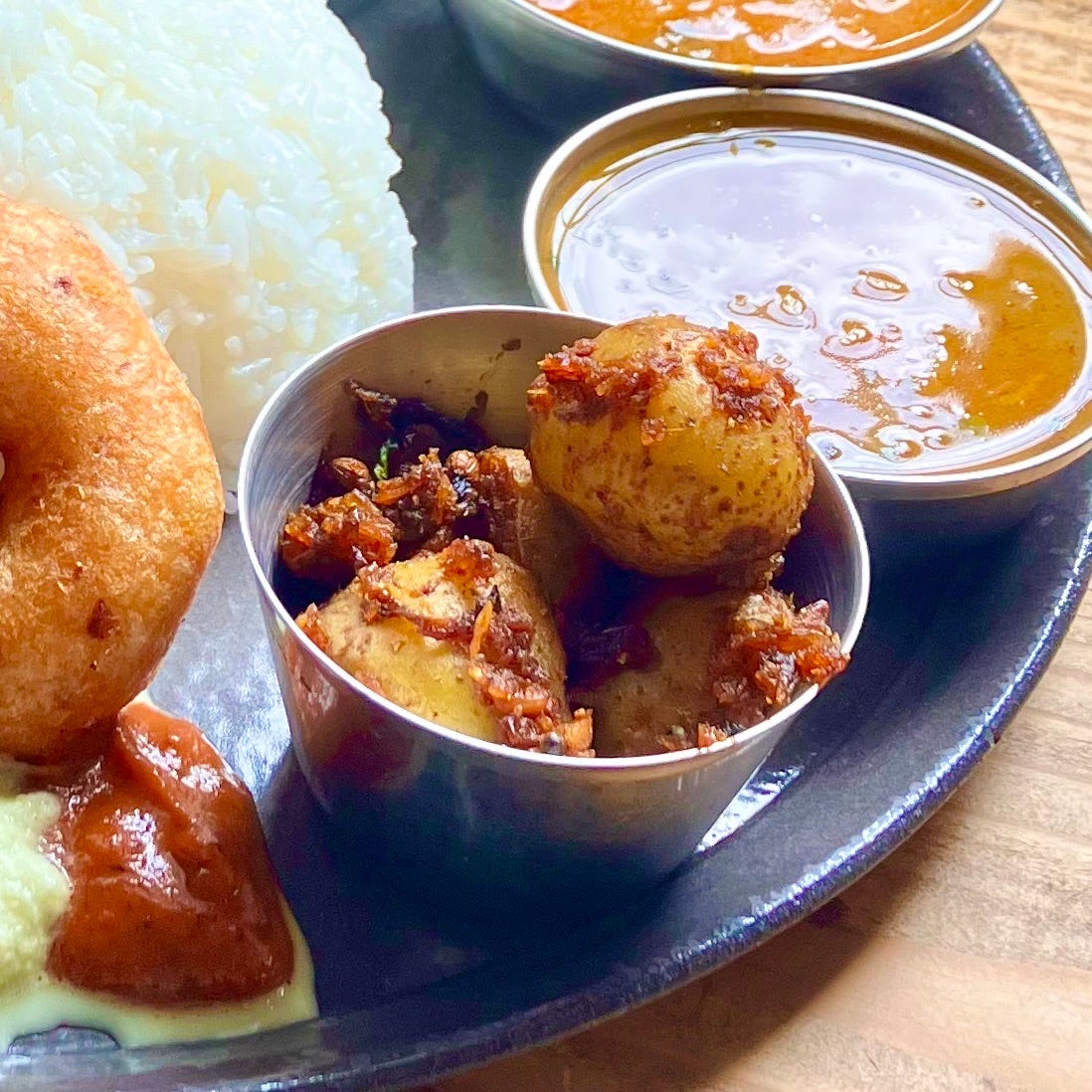
Then came the potatoes.
The menu simply described them as a seasonal vegetable stir-fry.
I took one bite and froze.
For several seconds, I couldn’t continue eating.
I just sat there staring at the plate, trying to understand what had happened.
Eventually curiosity overcame manners.
I called over a server and asked, as politely as possible, if someone might tell me what was in them.
A few minutes later, the chef appeared.
This was mortifying.
In Japan, asking to see the chef usually signals disaster. A complaint. A problem. Something must have gone terribly wrong.
I had accidentally staged a culinary emergency.
Flustered, I explained that the potatoes were so good I simply needed to understand them.
The chef smiled.
Coarsely grated coconut, garlic, a little onion, and carefully chosen spices, he said.
That was all.
And somehow, that was enough.
It felt like revelation: proof that when ingredients meet exact technique, they can become something far greater than themselves.
I thanked him profusely.
Then he asked, smiling:
“Would you like another serving?”
Reader, I nearly wept.
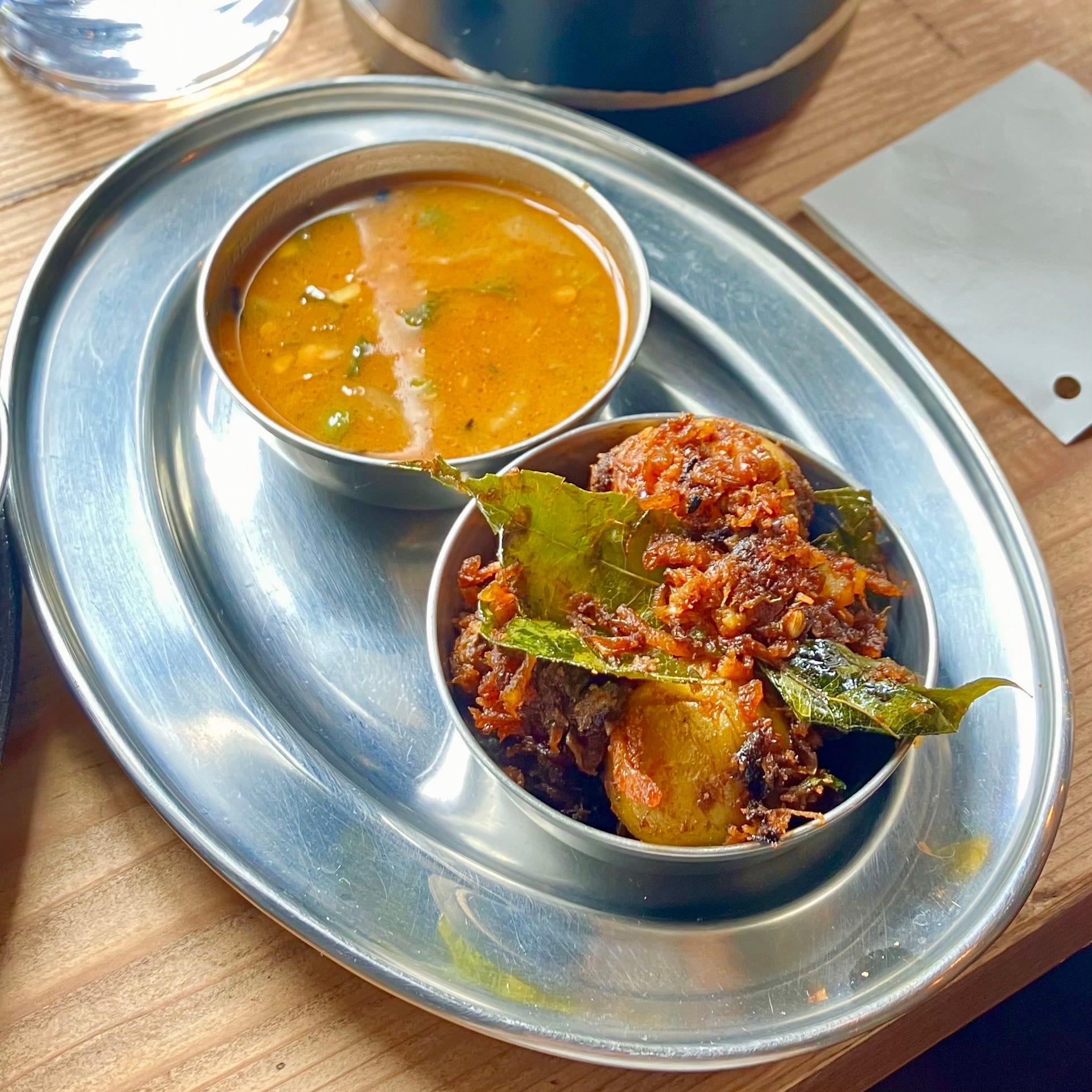
He returned with more potatoes and gave me one instruction:
“Mix them into the soup with rice. Mash it all together.”
Keeping Cats and Birds Together
I obeyed.
And suddenly the bitter soup transformed.
What had seemed slightly unfamiliar—even austere—became the perfect counterweight to the potatoes’ sweetness. Together they created balance neither had possessed alone.
At that point, experimentation became inevitable.
I began mixing everything.
The oysters. The lamb. The sambar. The soup. The potatoes. Rice as mediator.
The result should have collapsed into confusion.
Instead, it became harmony.
Oysters and lamb should fight for dominance. Under ordinary conditions, one would overwhelm the other.
It would be like keeping a cat and a bird in the same cage.
And yet spice has an uncanny ability to tame.
It smooths rough edges without erasing character. It removes aggression while preserving identity.
The wild remains—but domesticated just enough to coexist.
That, I think, is the true genius of spiced curry.
Zimi-bukai
By the end of the meal—especially after the extra rice—I was completely full.
And yet I felt light.
No heaviness. No fatigue. Only the clean afterglow of spice.
In Japanese, we have a phrase: zimi-bukai.
It means something like deeply nourishing, profoundly flavorful.
It describes not just taste, but effect—the quiet feeling of having been restored by what you have eaten.
That meal was exactly that.
Even now, at my desk, I find myself thinking of those potatoes—of the oysters and lamb, of that silver mandala of tamed wildness.
Some flavors refuse to remain memories.
They insist on becoming destinations.
And I suspect Nara Station will be seeing me again very soon.