

The first time I realized people outside Japan didn’t take anko for granted, I was sitting in a small café in Kyoto.
In front of me sat a bowl of zenzai: a lacquer-dark soup of sweet red beans, breathing steam into the winter air. Across the table, a friend from Europe had ordered a towering matcha parfait.
We were both delighted with our choices.
I suggested that she try a spoonful of my zenzai.
She was the sort of traveler who happily tasted almost anything. Yet this time she shook her head.
It was made from beans.
Not because she disliked beans. She simply couldn’t reconcile the idea that beans were supposed to become dessert.
In the end, she returned home without ever discovering what makes anko so beloved.
If I could send a message back to my younger self at that table, it would be a simple one:
If you want someone to understand the beauty of something unfamiliar, you cannot argue them into it. You have to place the very best version in front of them and let it speak for itself.
The people of Nara seem to understand this instinctively.
The Anatomy of a Nara Icon
Consider Mimuro Monaka, one of Nara’s signature confections.
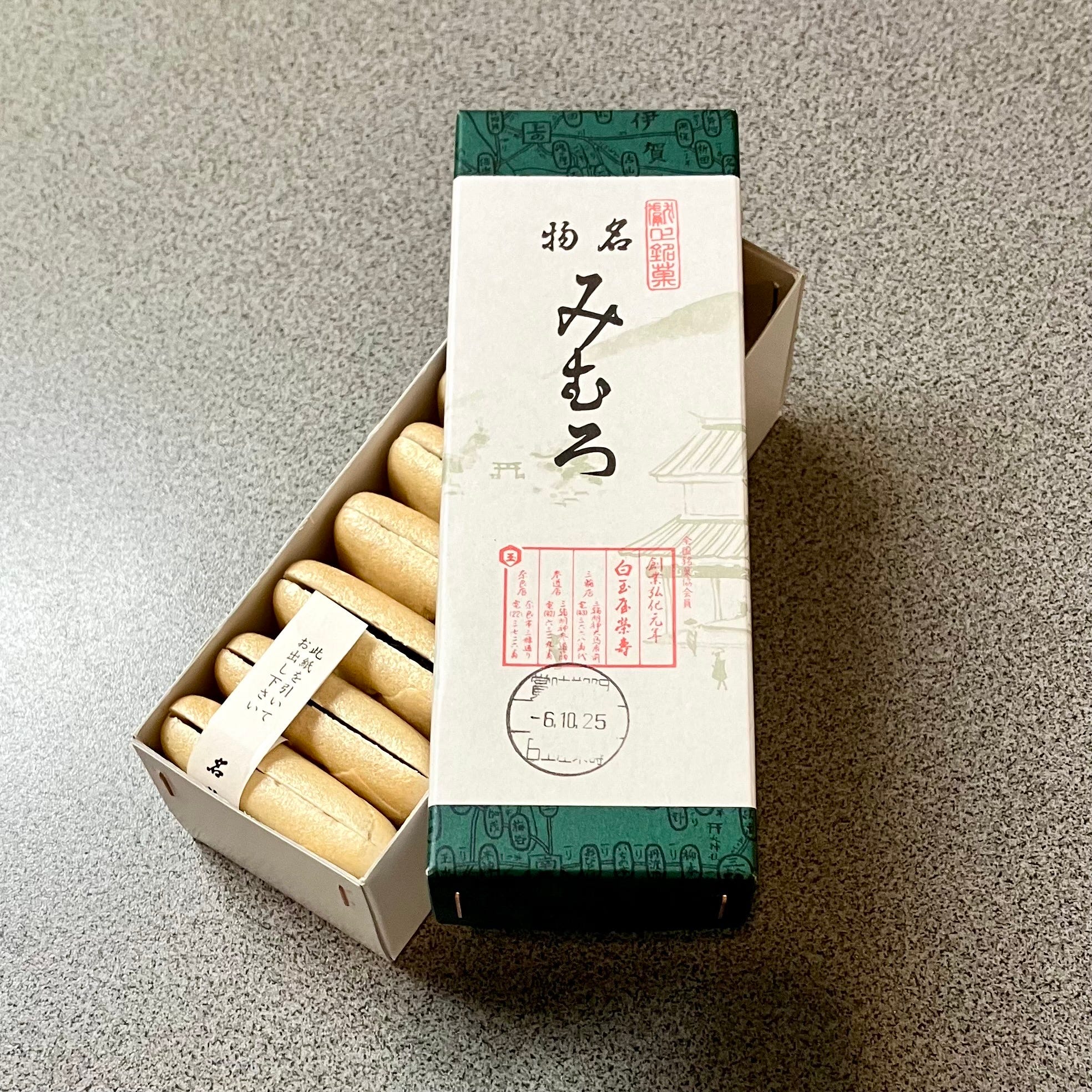
Its structure is almost absurdly simple: anko enclosed within two thin wafers made from rice.
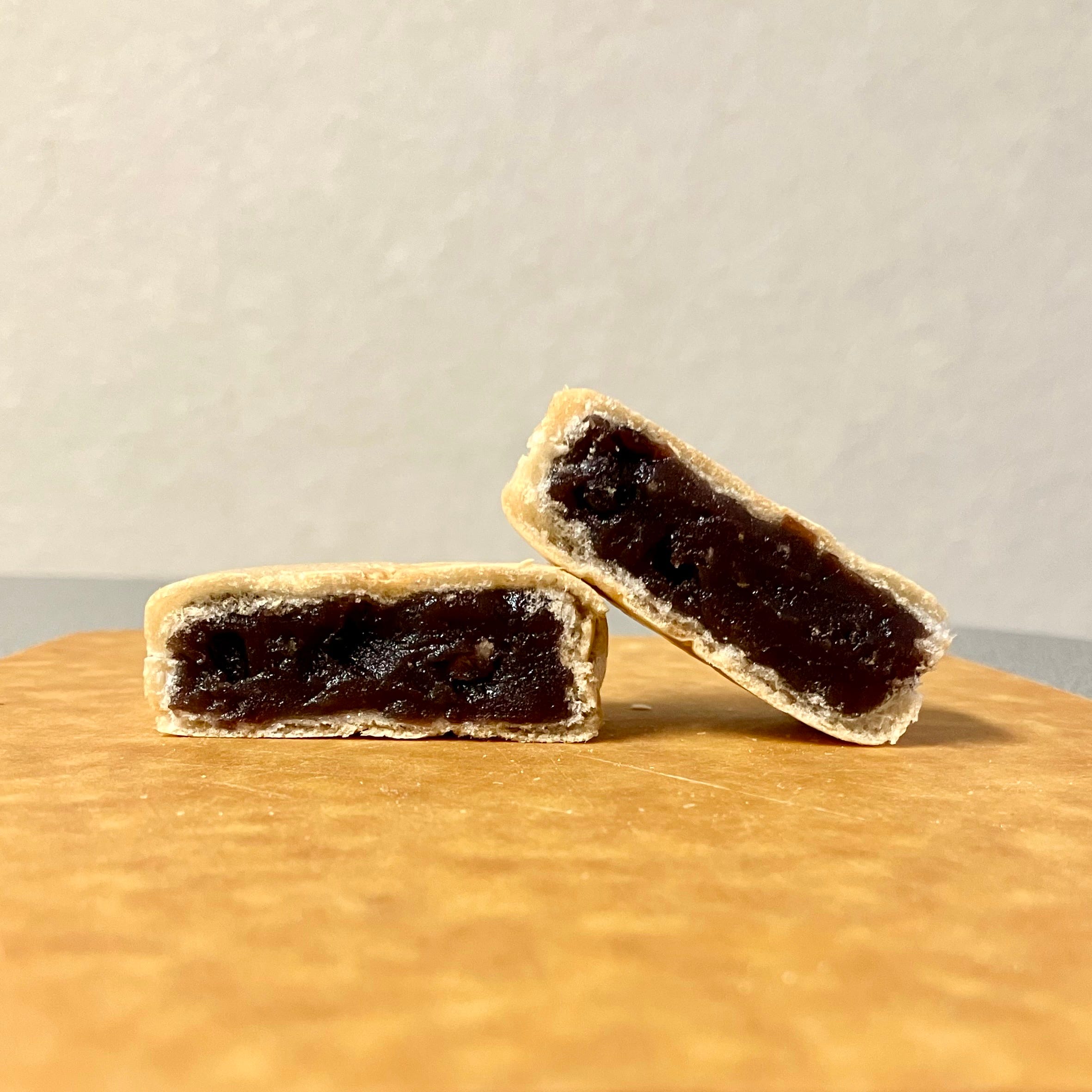
Yet the filling draws the eye first.
The bean paste glistens with a luminous sheen. It carries the flavor of azuki with remarkable freshness, as though the beans had somehow been persuaded to remain vivid even after becoming a confection.
The filling is primarily koshian—a perfectly smooth paste made by removing the skins from the beans—giving it an almost effortless melt-in-the-mouth quality. Folded into it are bits of tsubuan, whose skins remain intact. Those bits contribute depth, aroma, and a faintly crisp texture that keeps each bite interesting.
Sweet, certainly—but never aggressively so.
Its sweetness speaks softly to the brain. It eases tension. It persuades rather than overwhelms.
And then there is the wafer itself, which deserves equal attention.
Baked into an airy, delicate shell, it begins with a gentle crispness at the first bite. Yet almost immediately it dissolves across the palate, releasing a wave of toasted aroma and quiet sweetness.
A monaka becomes complete because of this shell.
Like the graham cracker crust beneath a perfect New York cheesecake, it supports the whole thing, both physically and spiritually.
Daibutsu Shōbai: The Great Buddha Way
I did not discover Mimuro until my twenties.
When I did, I could only stare in disbelief.
How had I missed a masterpiece that sat barely an hour away by train, waiting quietly for nearly two centuries?
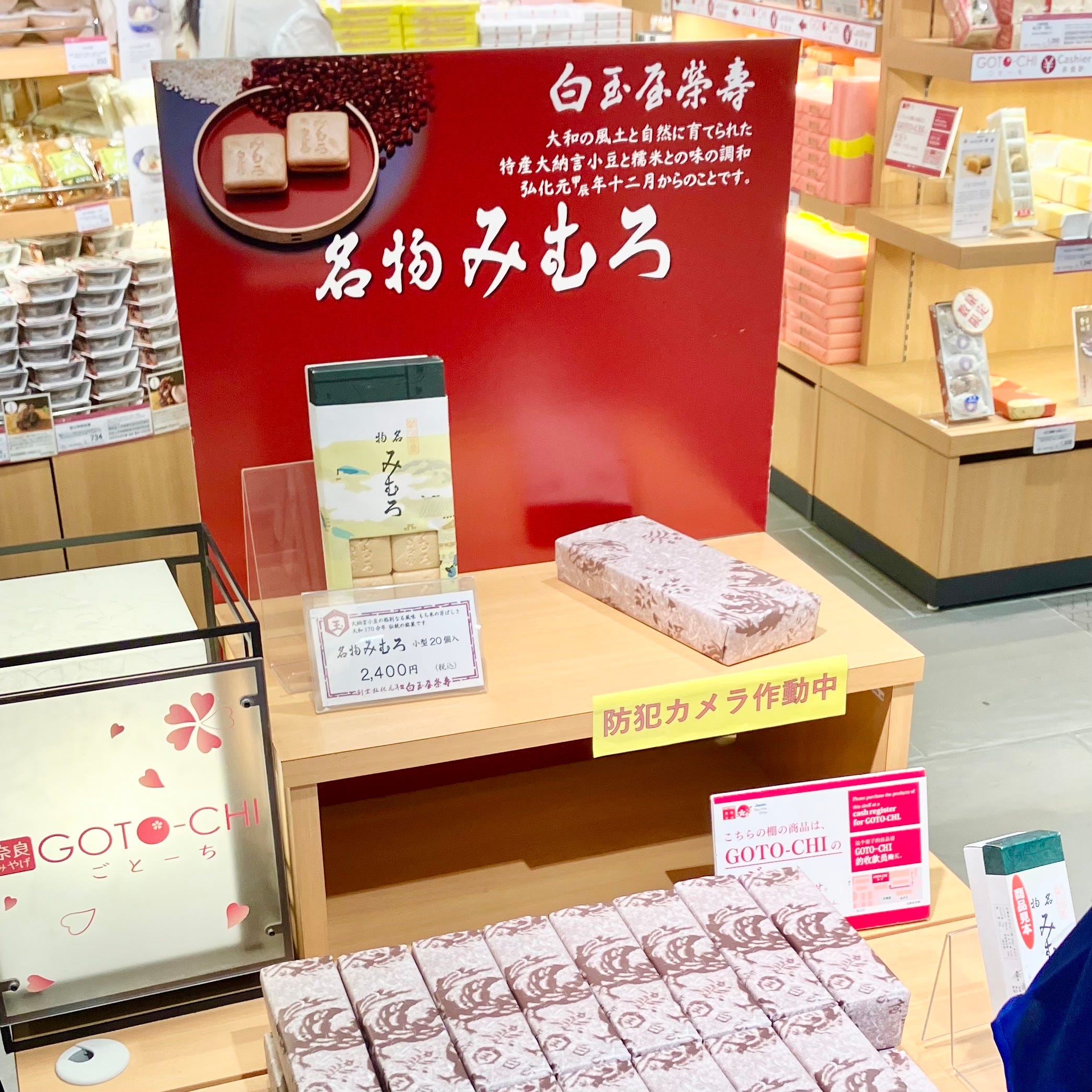
And yet I had missed it entirely because the people of Nara had never felt much need to carry it beyond their own borders.
This was not because they lacked confidence in selling elsewhere, nor because they wished to preserve its exclusivity as a local treasure.
They simply had no particular reason to do so.
That disposition is one of the defining characteristics of Nara, and perhaps where it differs most dramatically from neighboring Kyoto.
We sometimes call it Daibutsu shōbai—the Great Buddha way of doing business.
About thirteen centuries ago, Nara was the capital of Japan.
The capital moved to Kyoto roughly twelve centuries ago.
Many people left, but some things remained—most notably, the great Buddhist monuments and sacred sites that had already made the region important. Those treasures continued to draw visitors on their own. With a smaller population to sustain, generations could make a living simply by preserving inherited traditions and cultural assets with patience and care.
An Offering for the Gods
In Nara, wagashi often feel less like products than offerings.
Mimuro takes its name from Mount Mimuro, the sacred mountain that serves as the object of worship at Ōmiwa Shrine.
The name itself is a clue. This is a sweet that seems, first and foremost, to have been made for the gods.
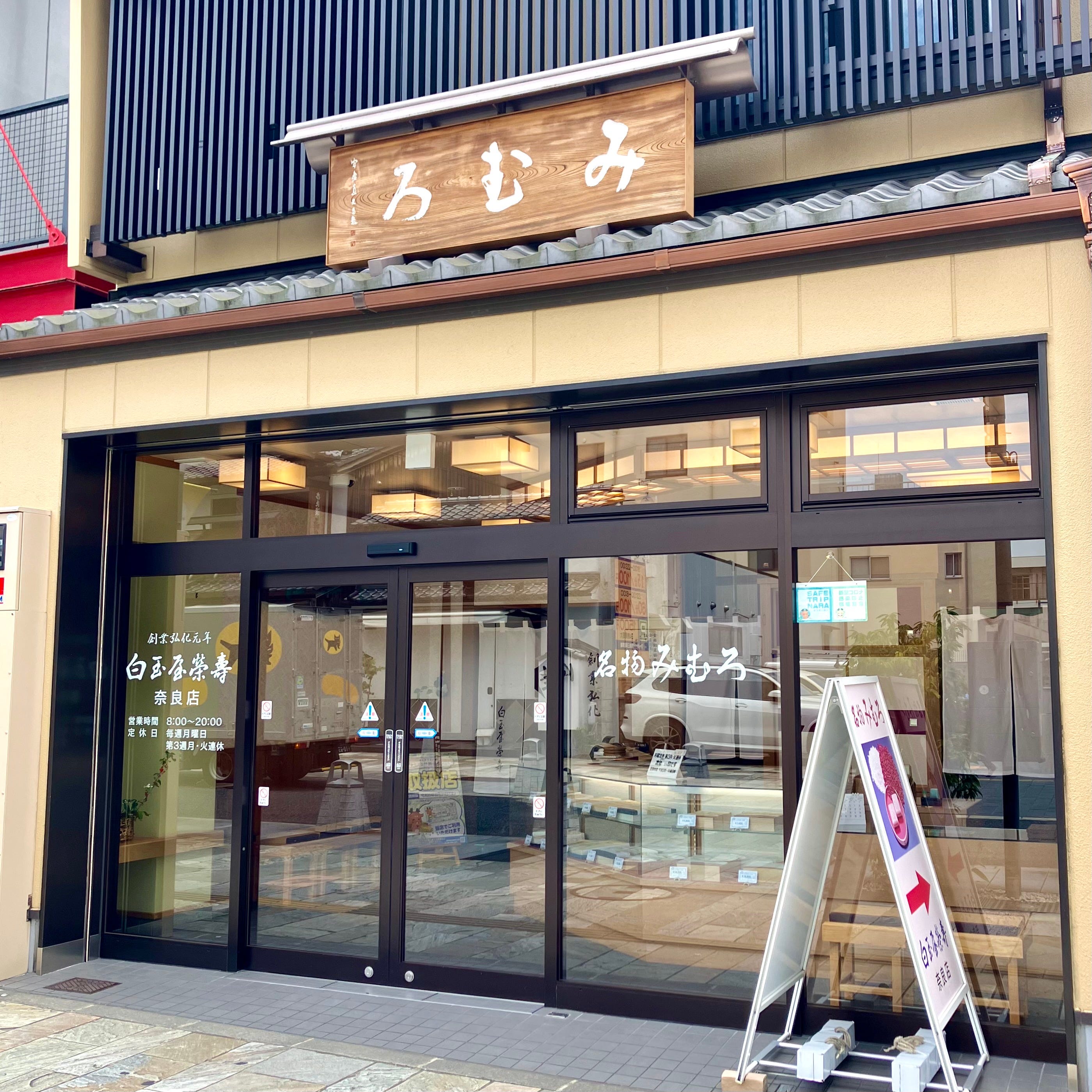
In Nara, one gets the sense that human beings were never the intended audience. Human beings merely happened to receive what was left over.
And yet, as I discovered for myself, encountering it for the first time can be startling. There is no trace of flattery in it. No attempt to chase trends, broaden its appeal, or explain itself to outsiders. Its excellence emerges from something rarer: the decision to follow a tradition faithfully and to make a thing as well as one possibly can, simply because that is the right way to make it.
The people of Nara still do not spend much energy selling Mimuro outside Nara.
Fortunately, the confection keeps for about a week at room temperature. Given enough determination, it can travel almost anywhere in the world.
The next time I find myself trying to explain the appeal of anko, I do not intend to make a long argument.
I will simply place a Mimuro Monaka in someone’s hand and listen for the crackle of the wafer.
I have come to believe that will be enough.
Interesting history of Nara and their choice to not ‘popularize’ their sweets. As a Westerner living in Japan for over 4 decades, I just haven’t gotten any craving for anko. I do like monaka, the beauty of wagashi, and it goes well with macha. But…
“The bean paste glistens with a luminous sheen.” A well-written line, perfect “food poetry”. It should stimulate my taste buds, but sadly, there was no saliva activity, no drooling ‘I can’t wait to eat’ response.
So, I don’t think just introducing anko to someone is enough to convert many people.
Your first paragraph about zenzai (one of my favourite ways to enjoy anko!) just brought back memories of ordering in any cafe I could find it in!
What a delicious blend of koshian and tsubuan anko in that monaka - I wish I could taste it myself!