

Every autumn, I eat chestnuts. It is a tradition I have kept my whole life.
I prefer them non-uniform.
Not merely because each chestnut differs in how it breaks on the tongue, its firmness, or the concentration of its flavor. I like the subtle variation within a single chestnut—the spots that are sweeter, softer, drier, or more intensely chestnut than the rest.
I have often wondered where this preference comes from.
The answer takes me back to my paternal grandmother’s kitchen.
Unlike my maternal grandmother’s modern kitchen with its marble countertops and gas oven, my father’s childhood home had a doma, a traditional earthen floor. As a child, I found the muted grey tataki floor and lime-plaster walls chilly and dim, almost unsettling.
Except in autumn.
On the days my grandmother boiled chestnuts, I would sit on a high-chair in the corner of the kitchen, gripping a small spoon and waiting.
“They should be about ready now.”
She would take a chestnut, boiled whole in its shell, and cut it neatly in half before handing it to me.
I would plunge my spoon into it immediately. I knew that once it cooled, the flesh would cling stubbornly to its inner skin. But at that precise moment, still steaming, it yielded effortlessly.
The first bite was never a guarantee of happiness.
A chestnut in its simplest form can be hard, dry, or faintly astringent. The real prize was one that was sweet and moist, with that deep, unmistakable flavor of chestnut.
But there was no need to worry. If I got a disappointing one, I only had to say:
“Can I have one more?”
My grandmother passed away when I was in middle school.
Boiled chestnuts seem deceptively simple, but preparing and eating them demands patience. For years, I assumed that those chestnuts, and the unexpected wonder of a beautiful bite, belonged entirely to the past.
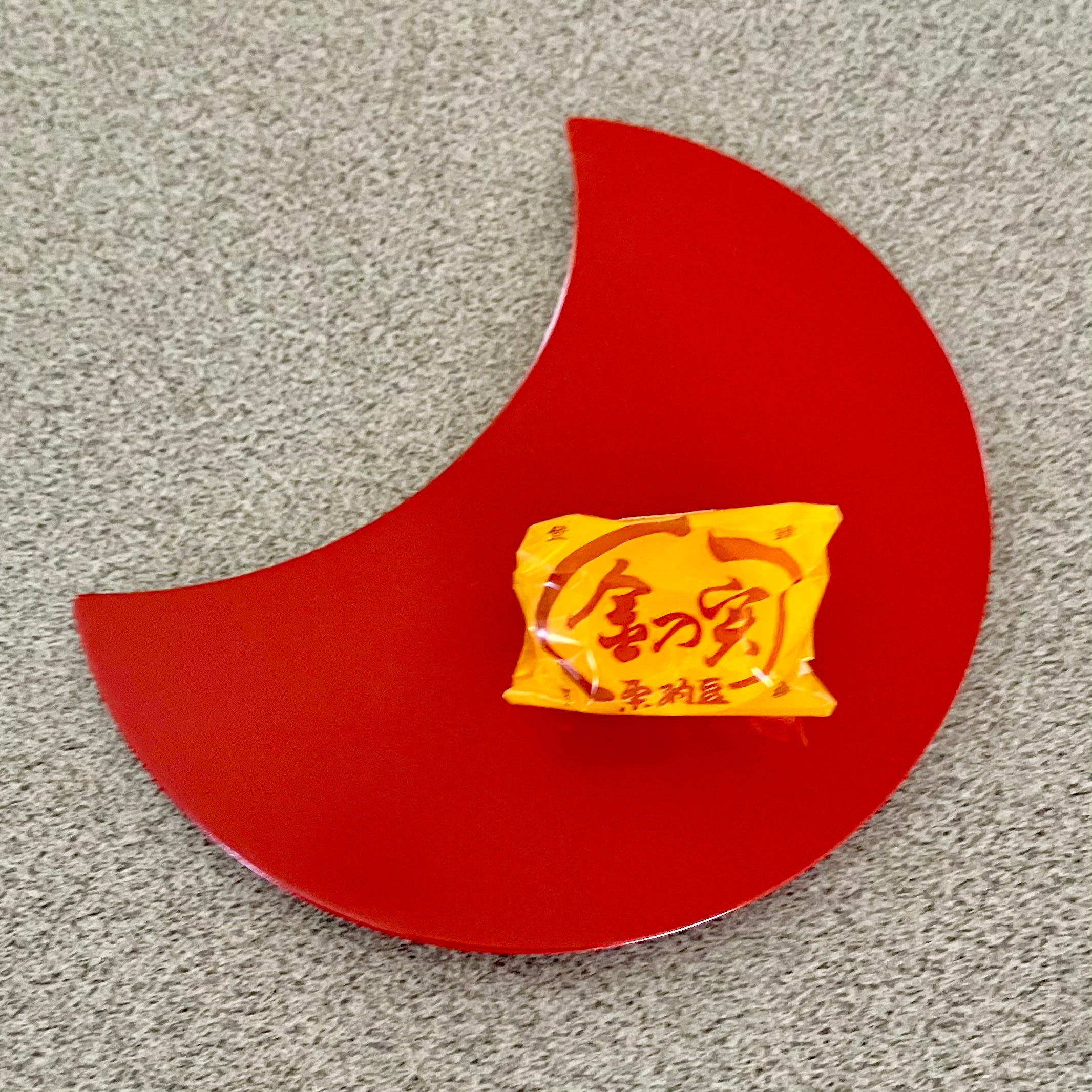
Then, one autumn afternoon, my grandfather brought home a box of Kin-no-mi from Kuriya.
They tasted more like real chestnuts than any chestnut confection I had ever eaten. They were subtly sweet, moist, and dense in texture. It was precisely the kind of beautiful bite I thought I had lost.
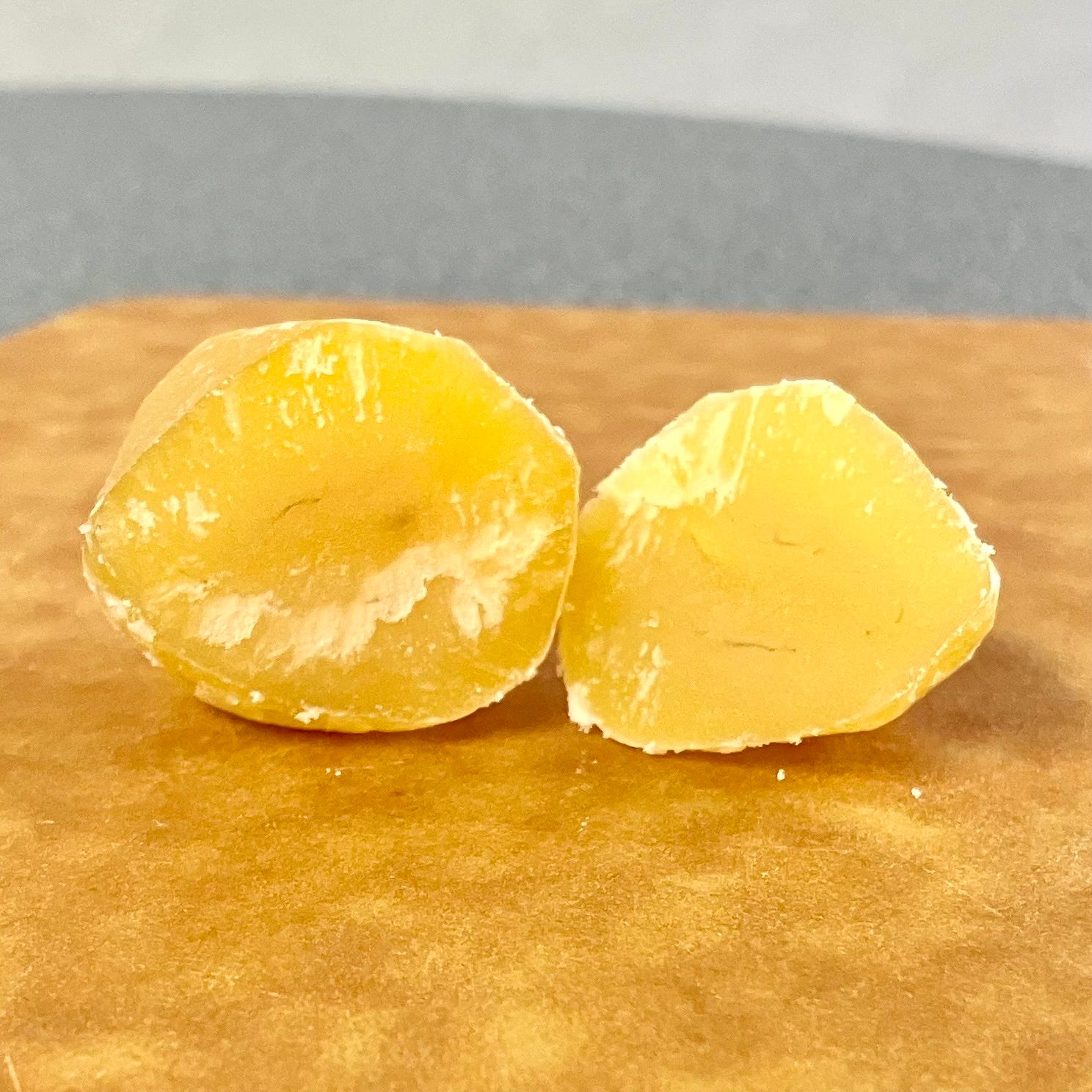
Kin-no-mi contains only three ingredients: chestnuts, sugar, and gardenia pigment, which gives the confection its golden color. Nothing is added to disguise the chestnut or transform it into something more elaborate. The chestnut remains, in a sense, itself.
And because of that, the confection preserves the proof of the chestnut’s nurture in nature—the subtle, organic fluctuations unique to every single piece.
Come to think of it, the landscapes that linger most deeply in our memories are always those that are never perfectly ordered. Just like those moments on the earthen floor where triumph and disappointment sat side by side, perhaps it is in things imbued with natural fluctuations that we discover an unforgettable tenderness.
No matter how many years have passed since my grandmother’s death, every time autumn arrives, I continue my search for the non-uniform chestnut. Every time I taste an unexpected, beautiful morsel, I am reunited with my former, unfinished self—the child sitting atop that high-chair, begging for just one more.