
A Midsummer Flash in a Tokyo Noodle Bowl
A bowl of hiyashi tanuki, a night sky of fireworks, and the art of forgetting the humidity

A Japanese summer is far from comfortable.
The air, thick with moisture, wraps itself around my entire body; clothes cling to my skin, and even a brief walk leaves me drenched in sweat. In a season like this, what is it that we crave?
We crave a jolt to the senses. We look for fireworks that rip through the night sky with an explosive roar reverberating through our bones, flooding our vision with color in a single, breathless instant. For the few minutes spent gazing up at them, the heat is forgotten.

For me, a bowl of chilled hiyashi tanuki soba at an old Tokyo noodle shop is precisely the same thing.
Growing up in Kyoto, the soba shop was strictly a place you only visited on “Papa’s wallet”.
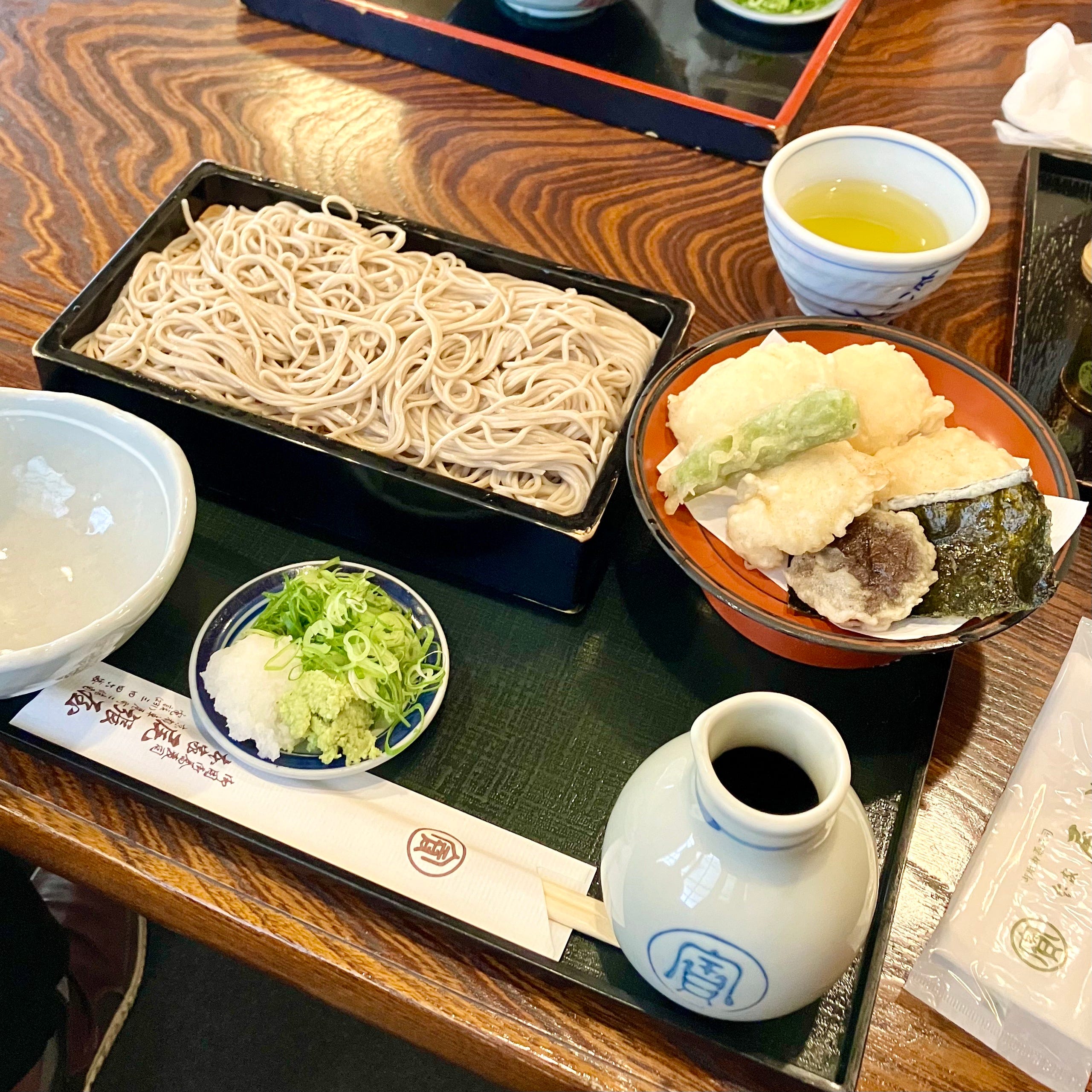
We even dressed up a bit, feeling as though we shouldn’t insult the centuries of history housed within those walls. I loved the noodles, but they were a rare luxury, not a part of daily life.
So when I moved to Tokyo, I was astonished: the city was practically swimming in soba shops. They served their noodles unbelievably cheap, delicious, and at an almost impossible speed.
Here, the soba shop was a mundane fixture of the everyday.
Before long, these places became part of my daily routine, too.
One suffocating summer day, I paid a visit to my neighborhood joint.
On its weathered wall hung a strip of stark white paper: “Hiyashi Tanuki.”
Intrigued, I ordered it.
But the moment it was carried to my table, I had to blink. It looked nothing like the traditional soba I knew. Instead, it had the unapologetic, glorious chaos of hiyashi chuka (chilled Chinese-style noodles).
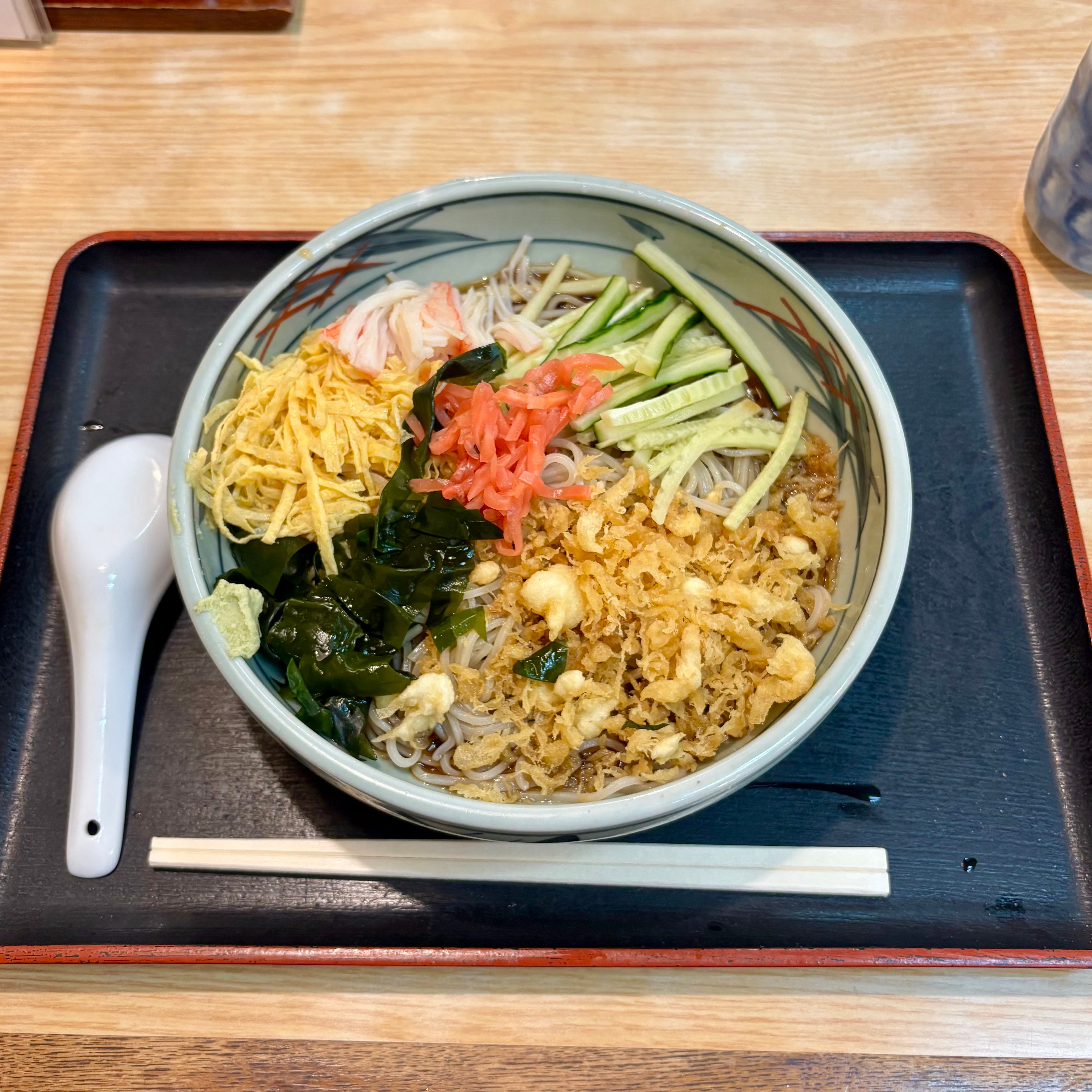
There was a bright crown of pickled red ginger, the lime-green of cucumber, shredded yellow omelet, the red-and-white of kanikama (crab sticks), and deep forest-green wakame seaweed.
And then, piled on with zero restraint, a mountain of golden tenkasu—those crisp, airy shards of tempura batter.
I couldn’t help but smile at the absurdity.
Was it a soba, or was it trying to be hiyashi chuka?
It was delightfully flamboyant.
The vessel itself was ice-cold to the touch.
I hoisted the noodles from beneath the mountain of fried batter, the tiny golden crumbs clinging stubbornly to the strands.
First comes the sweet, savory richness of the crisp fry, followed immediately by the chilled umami and sharp saltiness of the dashi broth. A chew, and the earthy aroma of buckwheat releases, before the noodles slide effortlessly down the throat.
In that exact instant, the latent wasabi strikes. The sharp aroma piercing my nose and the sting on my tongue beautifully wipe away any lingering trace of the oil.
With the next bite, the crisp, watery crunch of cucumber takes the stage. After that, the egg mellows everything out, while the kanikama adds a savory note of the sea.
With every single mouthful, a new sensation presented itself; it refused to be monotonous for even a second. The chill, the oil, the dashi, the buckwheat, the wasabi—each took its bow and vanished in turn.
Before I knew it, the bowl was empty.
Just as fireworks do absolutely nothing to lower the air temperature by even a single degree, a bowl of hiyashi tanuki doesn’t actually make the heat go away.
The moment I step outside the shop, the humid, heavy air wraps around me just as before.
Yet, for those few minutes spent eating, the oppressive sun, the windless damp air, and the heavy drag of a wet shirt against my spine all dissolve into the background.
I am entirely consumed by a single bowl of noodles.
In a Japanese summer, mere coolness is not enough.
And so, we look up at the fireworks, and we lose ourselves in a cold bowl of hiyashi tanuki.
Not to conquer the heat, but to forget its existence, if only for a fleeting moment.