

The moment I take a bite of nasi lemak ayam goreng, I am back in the kitchen of my childhood home in Kyoto.
The cold marble table, the paper spread over the plates, and the karaage landing on it one after another, each a brown just short of burnt.
I pick one up and pop it into my mouth. First come the fibers and scent of ginger, and right behind them, the toasty aroma of a generous amount of sugar gone almost to caramel.
This is my grandmother’s karaage, as I remember it.
My friend calls out to me, and I come back to myself.
Right. I am in Malaysia.
Nasi lemak, Malaysia’s signature dish. She lives here and has brought me to the place that serves the best nasi lemak she knows. The nasi lemak ayam goreng here is every bit as good as she said.
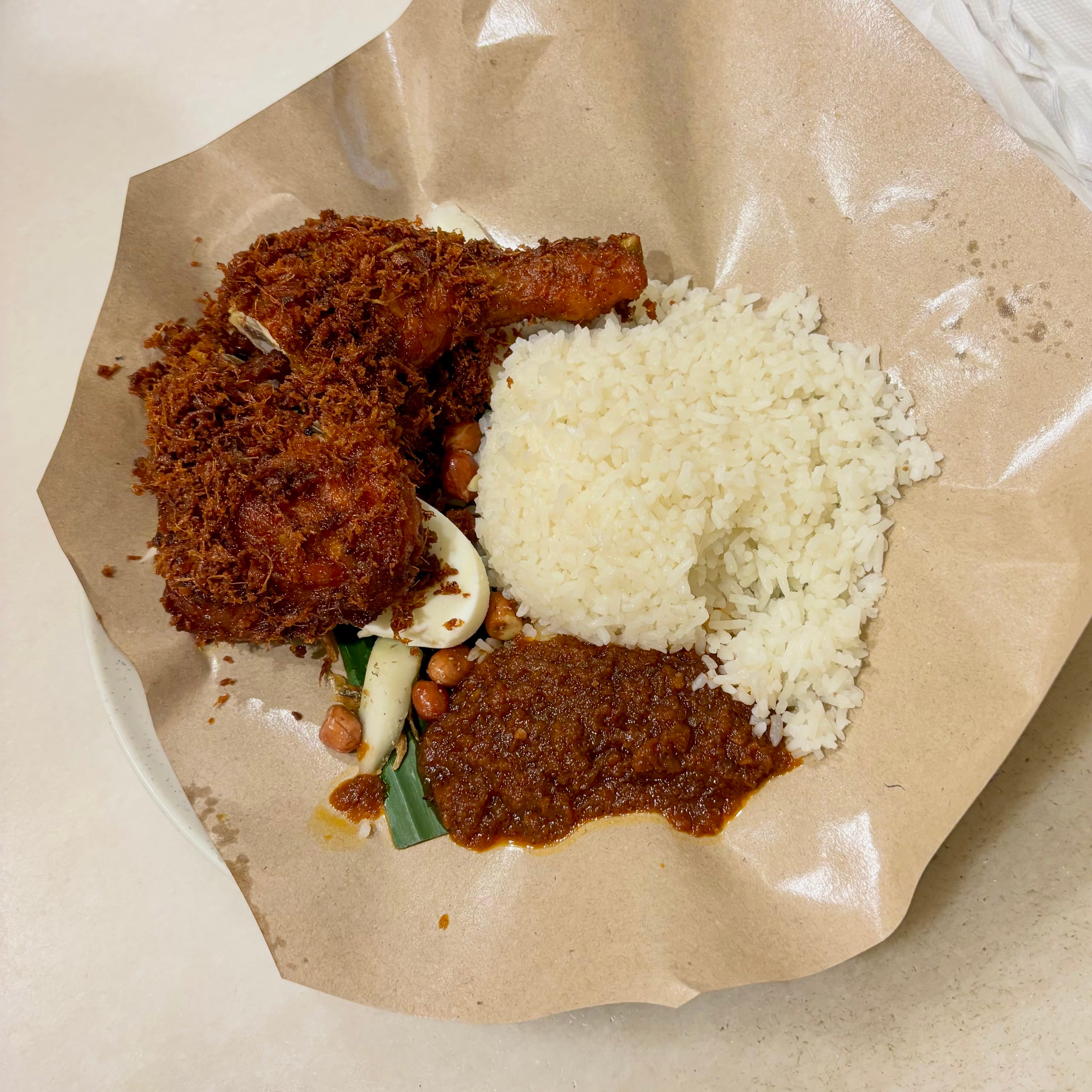
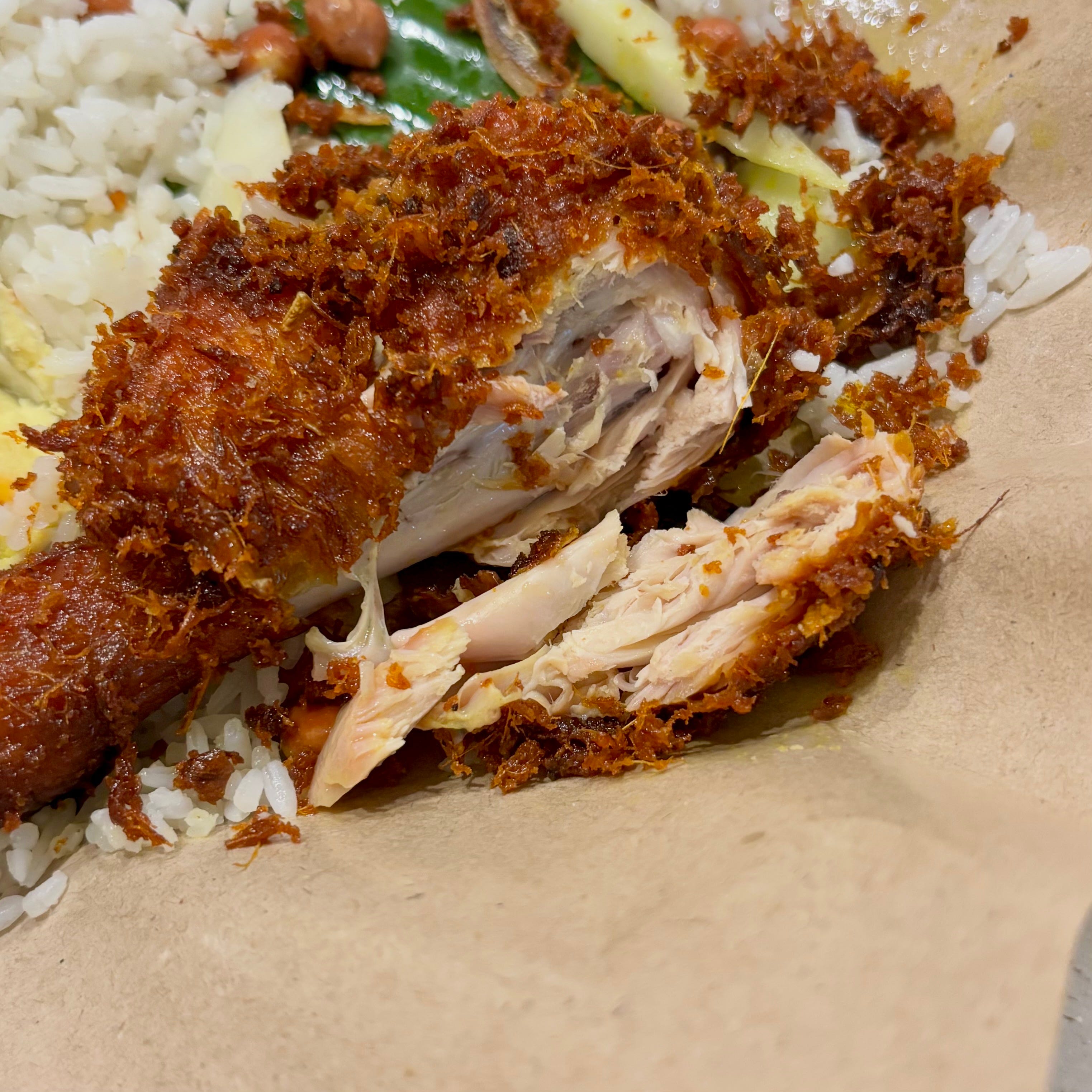
The chicken is tender enough to come easily off the bone with a spoon, yet the outside is fried crisp, without a trace of greasiness. Its crust is a deep golden brown, like karaage, and it is sweet.
Visible fibers cling to the surface. This crunchy, toasty layer is what stands out most. I think I catch the scent of ginger, too.
The caramelized peanuts glisten and crack when I bite into them. Eaten together with the chicken, they fill my mouth with sweetness, salt, and a rich aroma.
The rice, cooked in coconut milk, is fluffy and full of fragrance, and it holds its own beside the meat. The umami and sharp heat of the sambal, a chili paste, add a welcome accent.
I could keep eating this forever. Perhaps it is because, in a dish I am not used to eating, I sense a faint nostalgia.
I felt the same nostalgia when I ate this eggplant in Malacca.
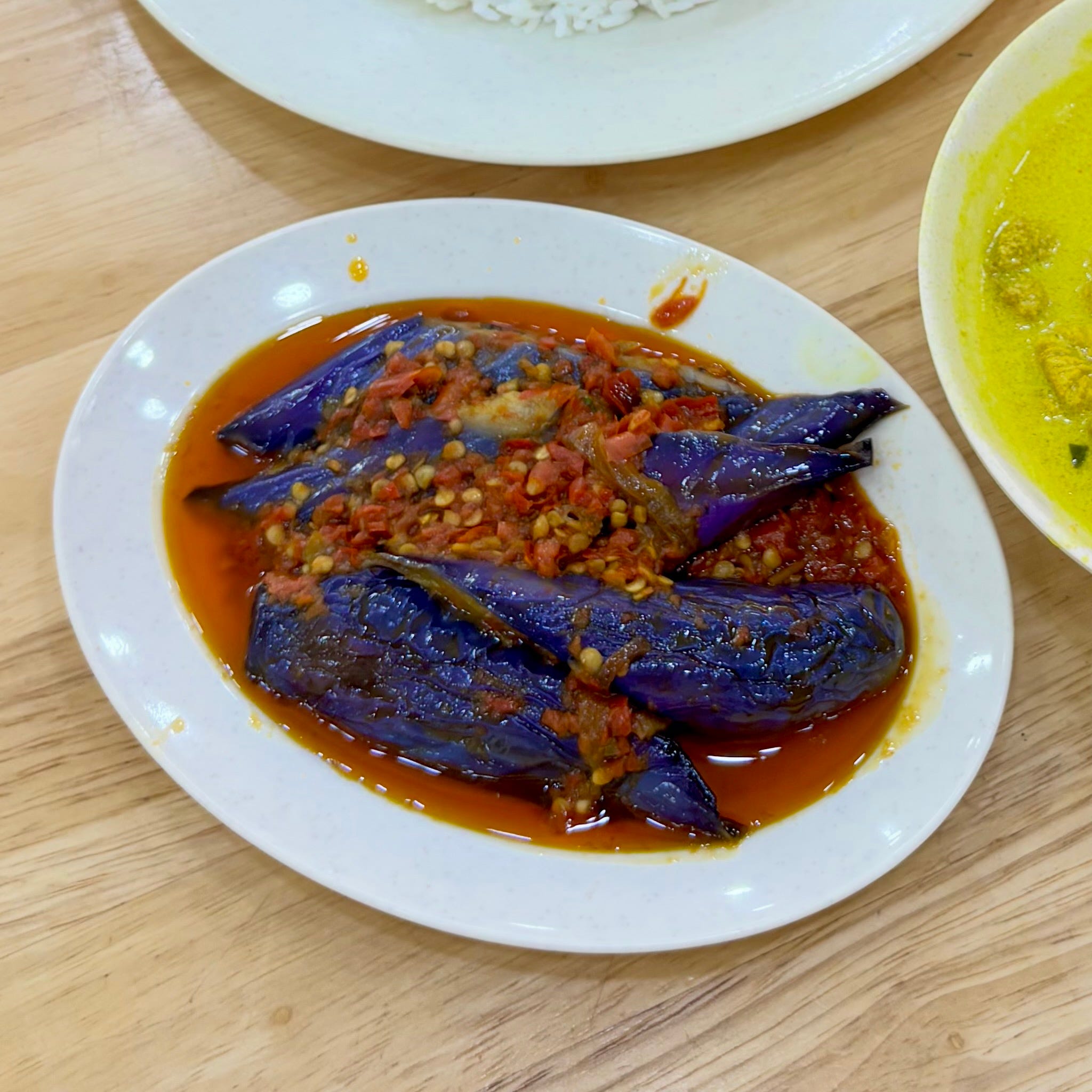
It was one of the side dishes lined up near the register of a local eatery, sitting in a bright red sauce that appeared oily. It looked fiery, but when I tasted it, it wasn’t spicy. The eggplant was sweet and full of umami, and meltingly soft all the way through. It tasted like agebitashi, vegetables fried and then steeped in dashi.
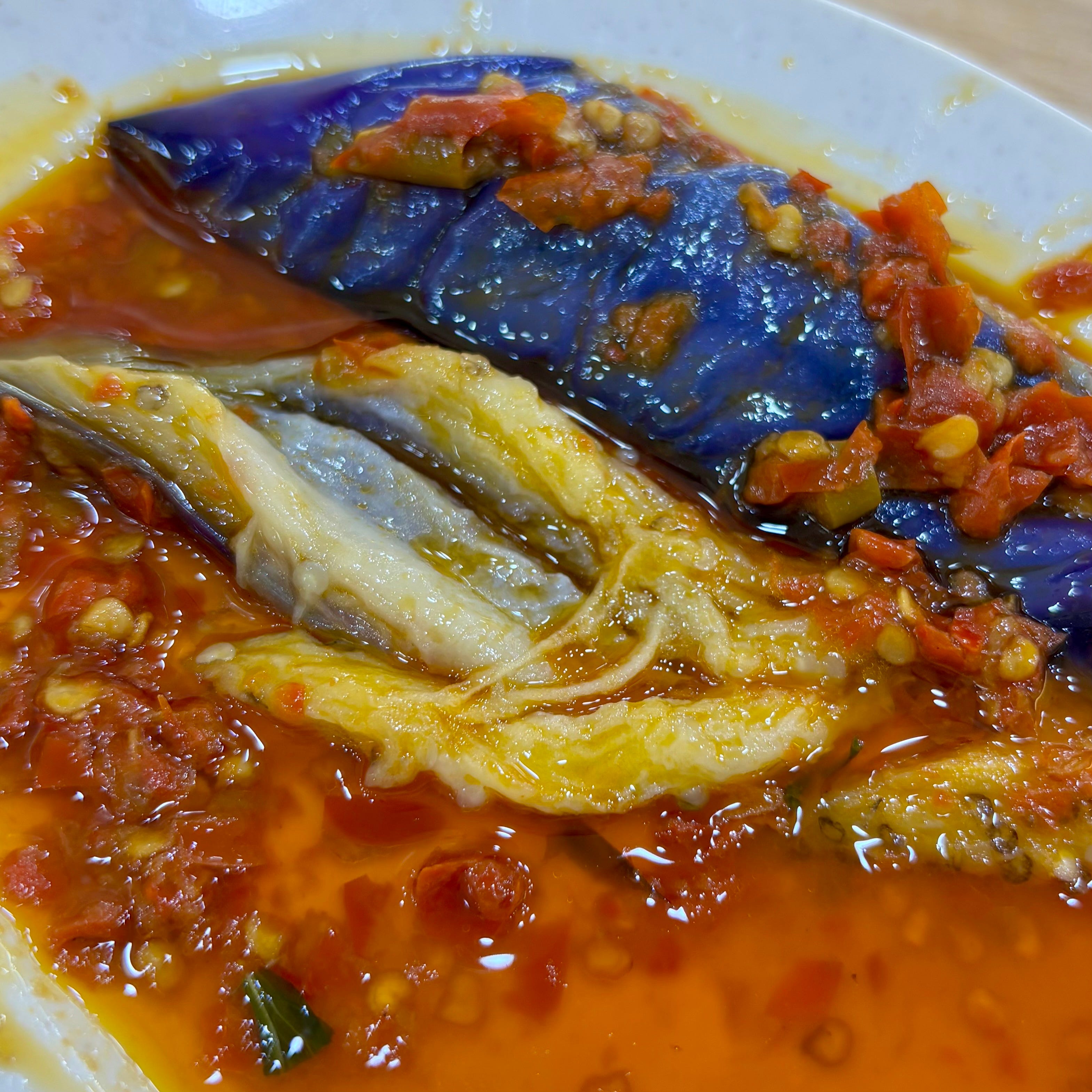
The skin was a textbook purple, and the flesh inside was white. They must put it in the oil right after cutting it, just as I was once taught.
When I feel that nostalgia on the road, it makes me happy. I can already imagine how easily the essence of these dishes will find its way into my kitchen back home.
Next time I make karaage, I might try serving it with sweet peanuts. And maybe I’ll cut the eggplant for my agebitashi a little bigger. Fewer cuts would get it into the oil sooner, and that might keep its color.
I turn my eyes back to the plate in front of me.
There is so much on it. The bone-in chicken, the crunchy fibers clinging all over it, peanuts, a boiled egg, cucumber, sambal, and the coconut rice.
I carefully gather a little of several of them onto my spoon.
I picture my partner waiting back in Japan, going wide-eyed over my cooking, and I smile.